- Official name: Alcatraz Island
- Location/ area: Located 1.25 miles offshore from San Francisco, California, in the middle of San Francisco Bay.
- Size: Approximately 22 acres
- Altitude, terrain type, climate: Elevation ranges from sea level to 135 feet. The island has steep terrain, exposed rock, and coastal vegetation with a cool, foggy maritime climate.
- Major areas/sections: Main Cellhouse, Lighthouse, New Industries Building, Guardhouse, Dock Area, Gardens, and historic ruins from the military and prison eras.
- Age: Established as a U.S. military fort in the 1850s
- No. of visitors per year: Over 1.5 million
- UNESCO World Heritage Site: Listed on the National Register of Historic Places since 1976
- Access: Only by ferry
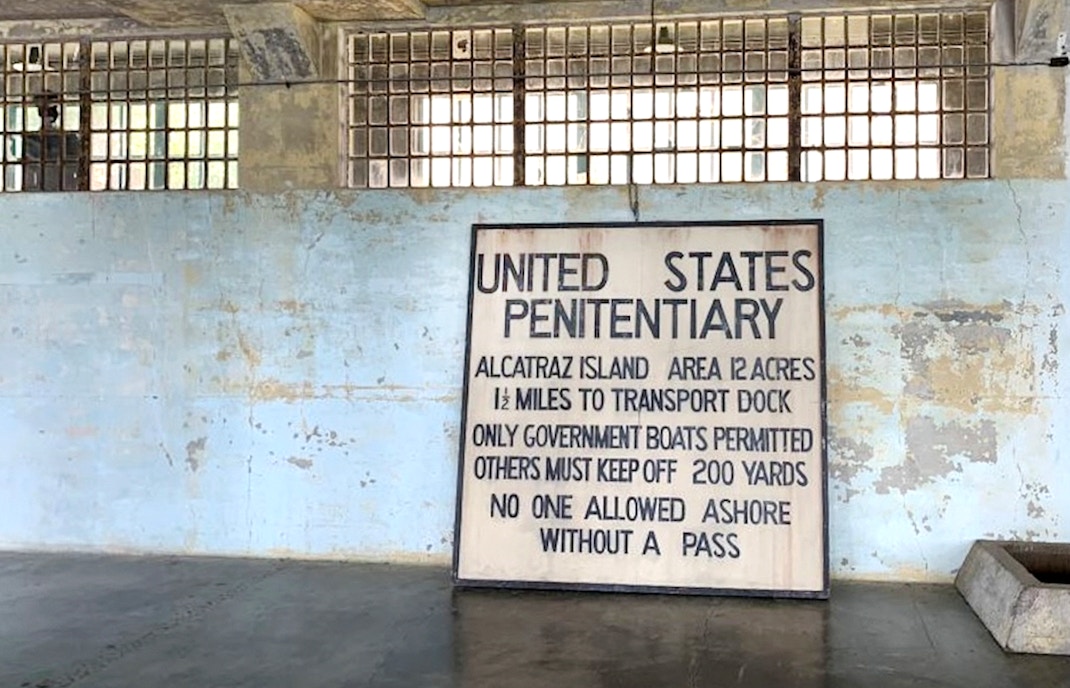
Located in the heart of San Francisco Bay, Alcatraz Island welcomes visitors at one of America’s most storied landmarks. Known for its former military and infamous prison history, the island features restored buildings, native gardens, and panoramic views of the bay. Plug into your audio guide as you explore cellhouses, learn about the Native American occupation, and enjoy a self-guided experience rich in history and natural surroundings.
Quick facts
Highlights of Alcatraz Island

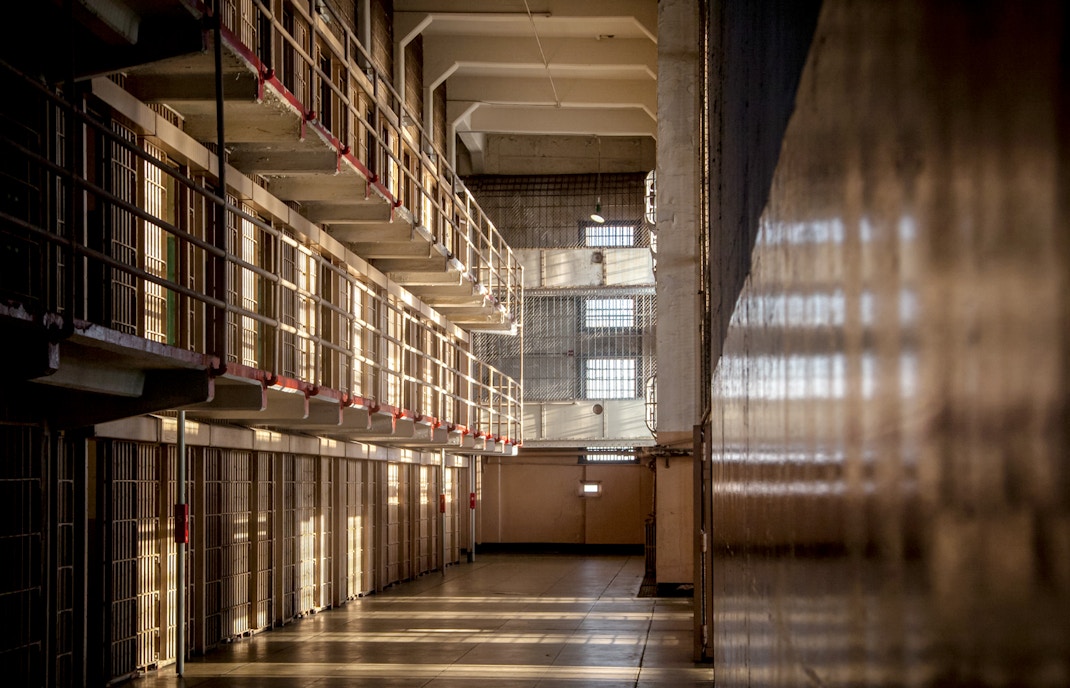
The Cellhouse
Location: Top of the island
This is the main draw of any visit. Once the heart of the prison, the Cellhouse still holds rows of tiny cells, metal doors, and narrow walkways. The award-winning audio guide leads you through the block, sharing stories of escape attempts, lockdowns, and daily life inside. The voices of former inmates and guards make it feel personal and real.

The Recreation Yard
Location: Adjacent to the Cellhouse
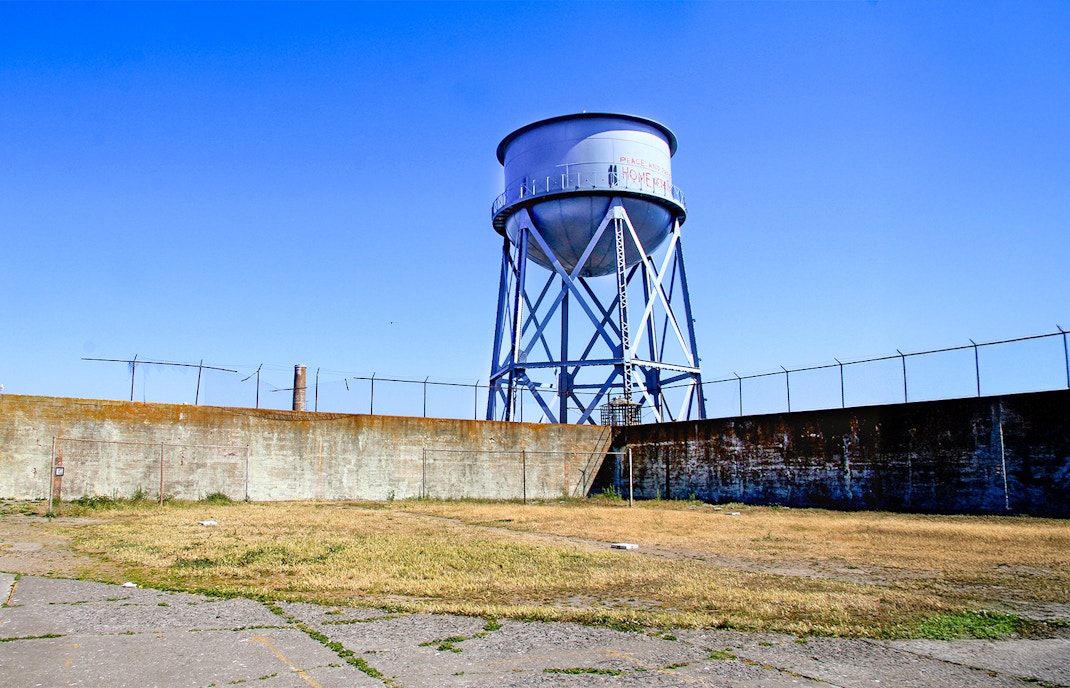
This open-air yard was where prisoners exercised, played games, and briefly saw the city across the water. It’s a stark, concrete space with a view—one that prisoners could look at but never reach. Standing here, it’s easy to understand the psychological impact of being so close, yet so far from freedom.

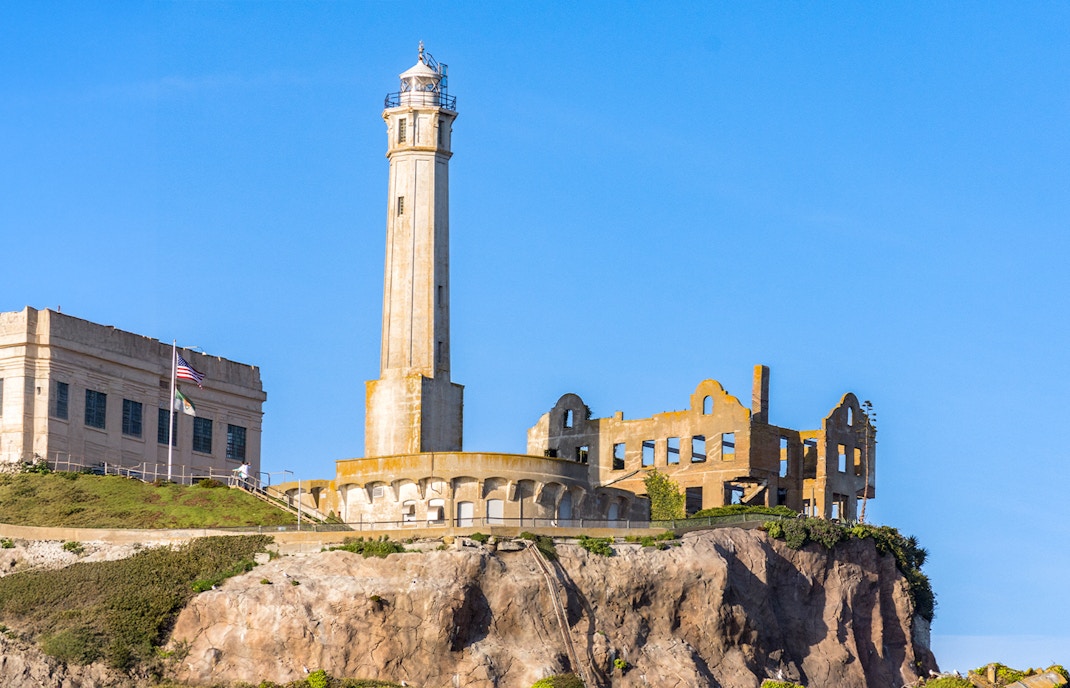
Alcatraz Lighthouse
Location: Near the Cellhouse ruins
Still operational today, this is the oldest lighthouse on the U.S. West Coast. It served both military and prison eras. Though you can’t go inside, it’s a prominent feature on the skyline and a great photo spot, especially at sunset or in the fog.

The Warden's House and guard quarters
Location: West side of the island, near the lighthouse
Now in ruins, these once housed the island’s top authority figures. The crumbling walls and exposed framing contrast sharply with the still-intact Cellhouse, reminding visitors that even those in charge lived isolated lives. The spot, on the island’s west side, also offers one of the best panoramic views of the Golden Gate Bridge.

Signs of protest
Location: Visible near the dock and on the water tower
In 1969, Alcatraz was occupied by Native American activists in a historic protest that lasted nearly two years. Their painted slogans—such as Peace and Freedom and Welcome to Indian Land—are still visible today. They mark a powerful moment in U.S. civil rights history that is now part of the island’s identity.

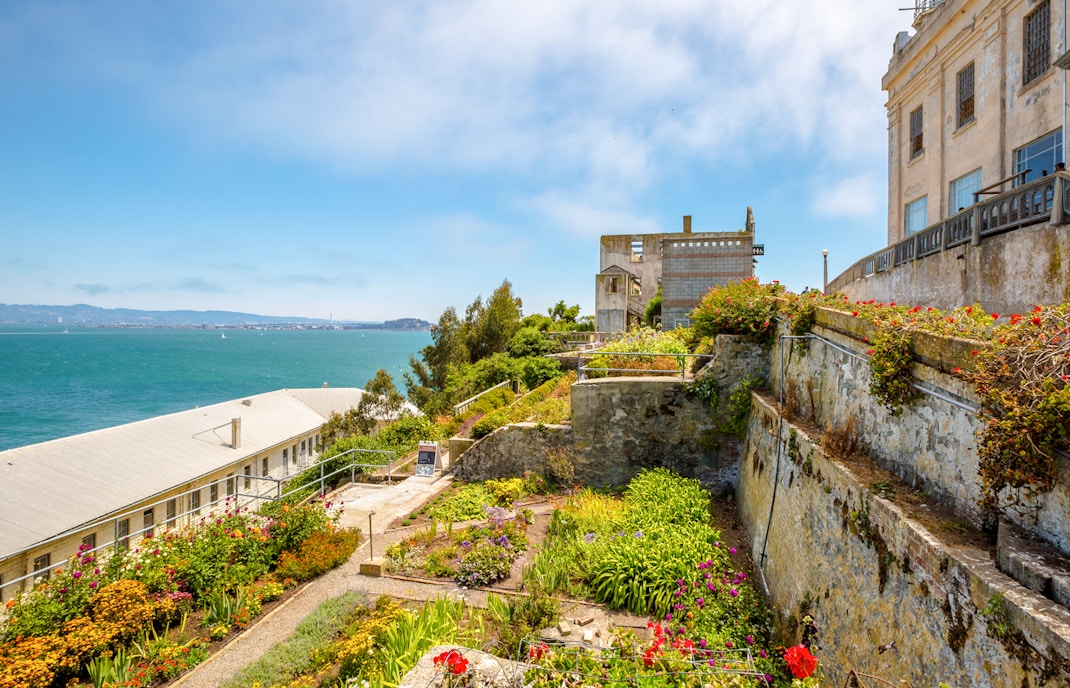
Alcatraz Gardens
Location: Scattered around the island
Originally planted by military families and prison staff, these gardens were abandoned after the prison closed. Today, volunteers have brought them back to life. You’ll see flowering succulents, heirloom roses, and birds nesting among the plants—proof that nature is slowly reclaiming the Rock.
How it came about: History of Alcatraz
Alcatraz has worn many hats. Originally used by the U.S. Army in the mid-1800s as a military fortress and detention center, it became a federal prison in 1934. Designed to hold the most dangerous criminals, it operated until 1963 and housed well-known names like Al Capone and George “Machine Gun” Kelly. In 1969, Native American activists occupied the island in a historic protest that lasted 19 months, leaving a legacy that’s still visible in graffiti and guided programming today.
Detailed history hereFrequently asked questions about Alcatraz
Alcatraz held some of America’s most notorious criminals. Al Capone, George “Machine Gun” Kelly, and Robert Stroud—known as the “Birdman of Alcatraz”—were among the high-profile inmates. Each brought national attention to the prison during their time there.
There were 14 known escape attempts involving 36 inmates. Most were caught or killed, but in 1962, three men—Frank Morris and the Anglin brothers—vanished without a trace. Their fate remains unknown, fueling decades of speculation.
Alcatraz’s isolation made it ideal. Surrounded by cold, fast-moving currents, it was believed to be escape-proof. Before it became a federal prison in 1934, it served as a military fort and detention center.
Yes. You can walk through actual cell blocks, including solitary confinement units. The audio guide takes you into the heart of the Cellhouse, where you'll see how inmates lived—and sometimes, tried to escape.
Not usually. While former inmates and guards have returned for talks in the past, these events are rare. Most personal stories are now shared through the audio tour and exhibit materials curated by the National Park Service.
In 1969, Native American activists occupied Alcatraz to protest federal policies and demand land rights. The 19-month occupation became a landmark event in Indigenous activism. Graffiti and signs from that protest are still visible today.
Expect moderate walking and an uphill climb. The path from the dock to the Cellhouse rises about 13 stories. A free mobility tram is available for visitors who need assistance.
Today, Alcatraz is a protected site managed by the National Park Service. It serves as a museum and historical landmark, preserving both the prison era and the island’s layered history, from military use to Native activism and beyond.
Yes. Over the years, visitors and former staff have reported strange sounds, unexplained cold spots, and eerie sensations—especially in the Cellhouse. While nothing is officially confirmed, Alcatraz’s haunting past makes it a hotspot for ghost stories.