Plan your visit to the California Academy of Sciences
The California Academy of Sciences is a science museum in Golden Gate Park best known for combining an aquarium, planetarium, rainforest dome, and natural history galleries under one roof. It is easier to cover than its scale suggests, but the visit can unravel quickly if you do not sequence it well, especially because planetarium slots fill early. This guide helps you time your arrival, choose the right ticket, and plan a route that avoids unnecessary backtracking.
Quick overview: California Academy of Sciences at a glance
If you only read one section before booking, make it this one.
- When to visit: Monday–Saturday: 9:30am–5pm; Sunday: 11am–5pm; Thursday NightLife runs 6pm–10pm. Weekday visits after 2pm are noticeably calmer than late mornings, because school groups and family arrivals thin out while most visitors are still clustered around the planetarium and aquarium.
- Getting in: From $49 for standard daytime entry. California Academy of Sciences Tickets cover daytime or NightLife entry, depending on the option selected. Advance booking matters most on summer weekends, holiday weeks, and Thursdays if you want a specific entry window.
- How long to allow: 3–4 hours for most visitors. Add extra time if you want a planetarium show, a full aquarium loop, and time on the living roof instead of rushing between headline exhibits.
- What most people miss: The living roof and African Hall are easy to skip because crowds funnel straight to the rainforest and aquarium, and the Earthquake Shake House gets overlooked when planetarium lines build.
- Is a guide worth it? Usually no — this is one of the easier large museums to do self-guided — but a clear route and an early planetarium reservation matter more here than paying extra for added narration.
🎟️ Tickets for California Academy of Sciences sell out a few days in advance during summer weekends and school holidays. Lock in your visit before the time you want is gone.
Jump to what you need
🕒 Where and when to go
🗺️ Getting around
♿ Facilities and accessibility
Where and when to go
How do you get to California Academy of Sciences
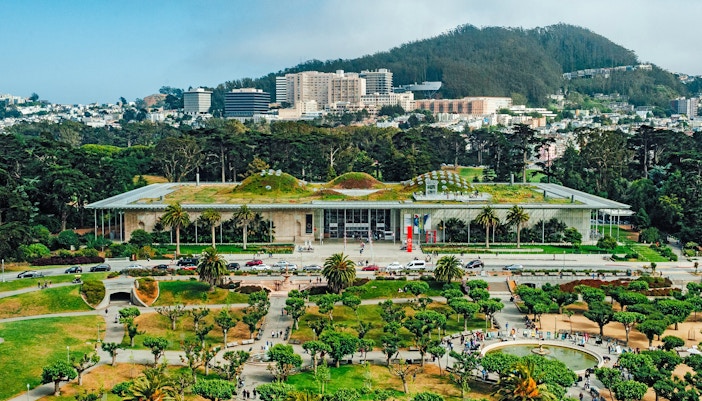
California Academy of Sciences sits in the Music Concourse area of Golden Gate Park, about 5 miles from downtown San Francisco, with de Young Museum and the Japanese Tea Garden right next door.
Address: 55 Music Concourse Dr, San Francisco, CA 94118, United States | Find on Maps
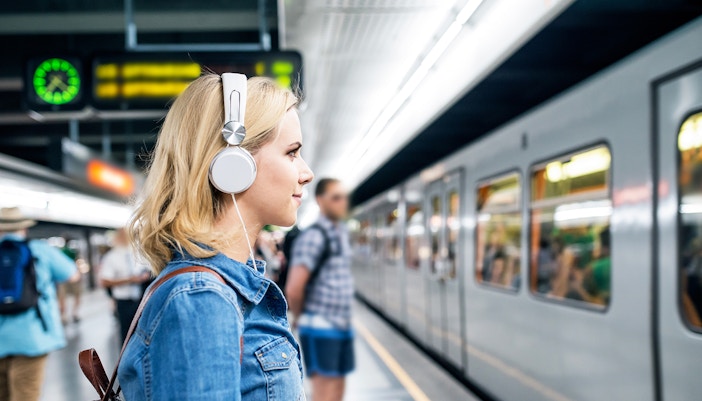
- Muni Metro: N Judah to 9th Ave and Irving St → about 15-min walk → the flattest approach is through the east side of Golden Gate Park.
- Bus: 44 O’Shaughnessy → Music Concourse / Academy of Sciences area → shortest public transit walk if you want to be dropped closest to the entrance.
- Taxi/rideshare: Drop-off at Music Concourse Drive → short walk → easiest option if you’re arriving with children or on a tight schedule.
- Parking: Music Concourse Garage → paid parking → enter from 10th Avenue and expect slower access on weekends and school-break mornings.
Which entrance should you use
There is one main public entrance, and the mistake most visitors make is treating the planetarium like any other gallery instead of booking that showtime as soon as they’re inside.
- Main entrance: Located at 55 Music Concourse Dr. Expect 10–20 min waits during weekends, holiday weeks, and late-morning entry peaks.
When is California Academy of Sciences open
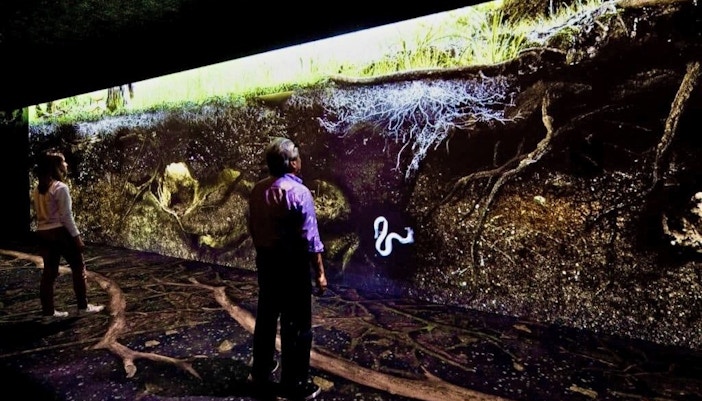
- Monday–Saturday: 9:30am–5pm
- Sunday: 11am–5pm
- Thursday NightLife: 6pm–10pm
- Last entry: About 1 hour before closing is the safest rule if you want time for more than a quick pass
When is it busiest: Late mornings on weekends, school holidays, and summer days are the most crowded, with the heaviest bottlenecks at the planetarium queue, rainforest dome, and penguin viewing areas.
When should you actually go: Weekdays after 2pm usually feel easiest because school groups have started clearing out, and you can move through the aquarium and rainforest with less stop-start crowding.
How do you get around California Academy of Sciences
California Academy of Sciences is a multi-level museum with a few big anchor spaces rather than one long linear route. It’s easy to self-navigate once you understand that the aquarium, rainforest, planetarium, and roof each pull crowds in different directions.
Main level
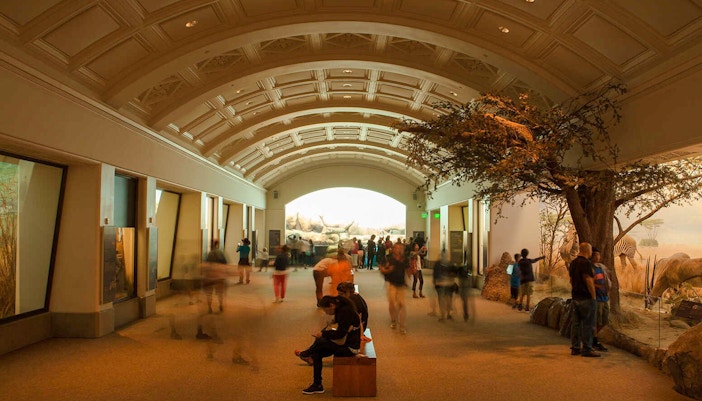
Ticketing, orientation, African Hall, and access to the living roof → budget 30–45 min if you want the historic galleries as well as the building itself.
Rainforests of the World dome
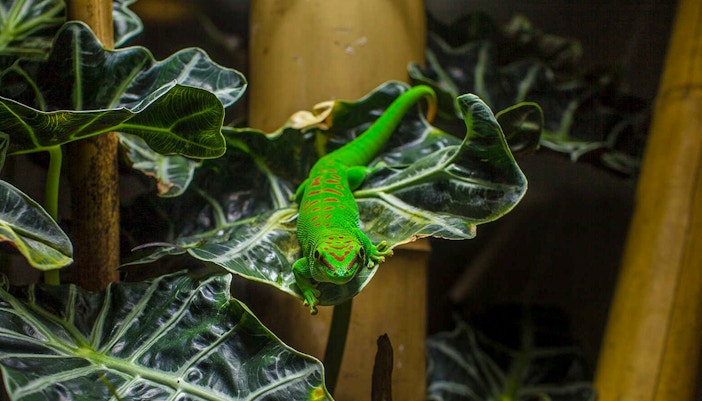
Four-story tropical biome with birds, reptiles, and a spiral path → budget 20–30 min, longer if you stop often for wildlife.
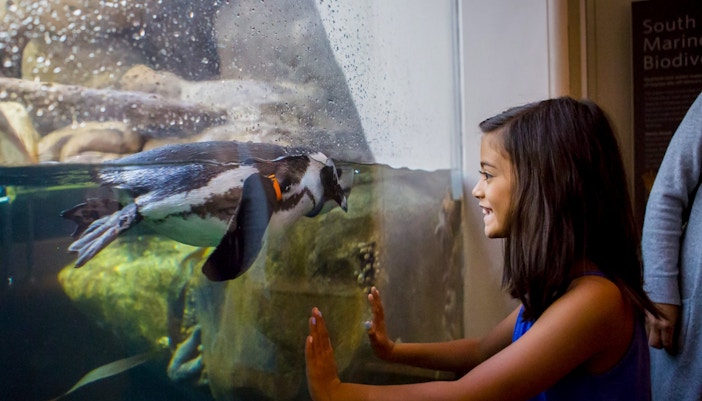
Lower level aquarium
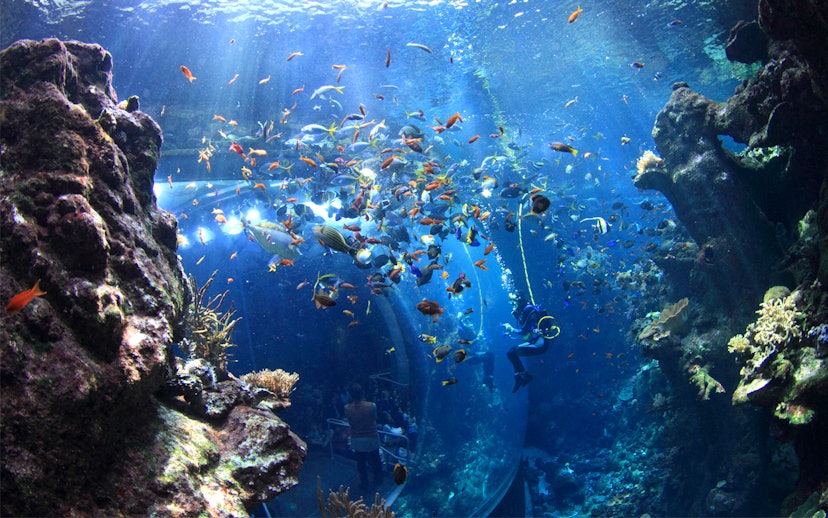
Coral reef, penguins, swamp habitats, rays, and dense live-animal displays → budget 45–60 min because this is where most visitors linger.
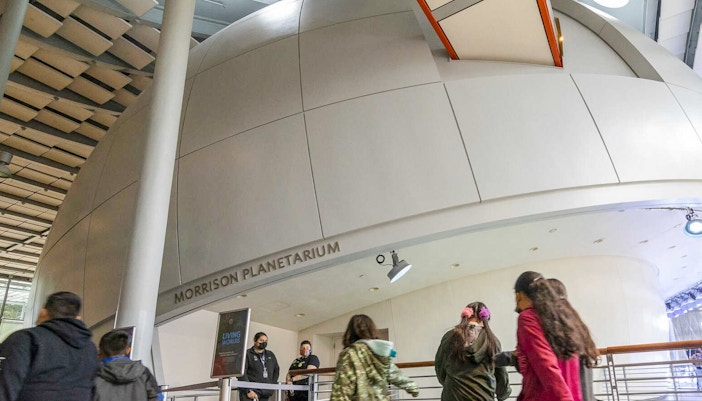
Morrison Planetarium
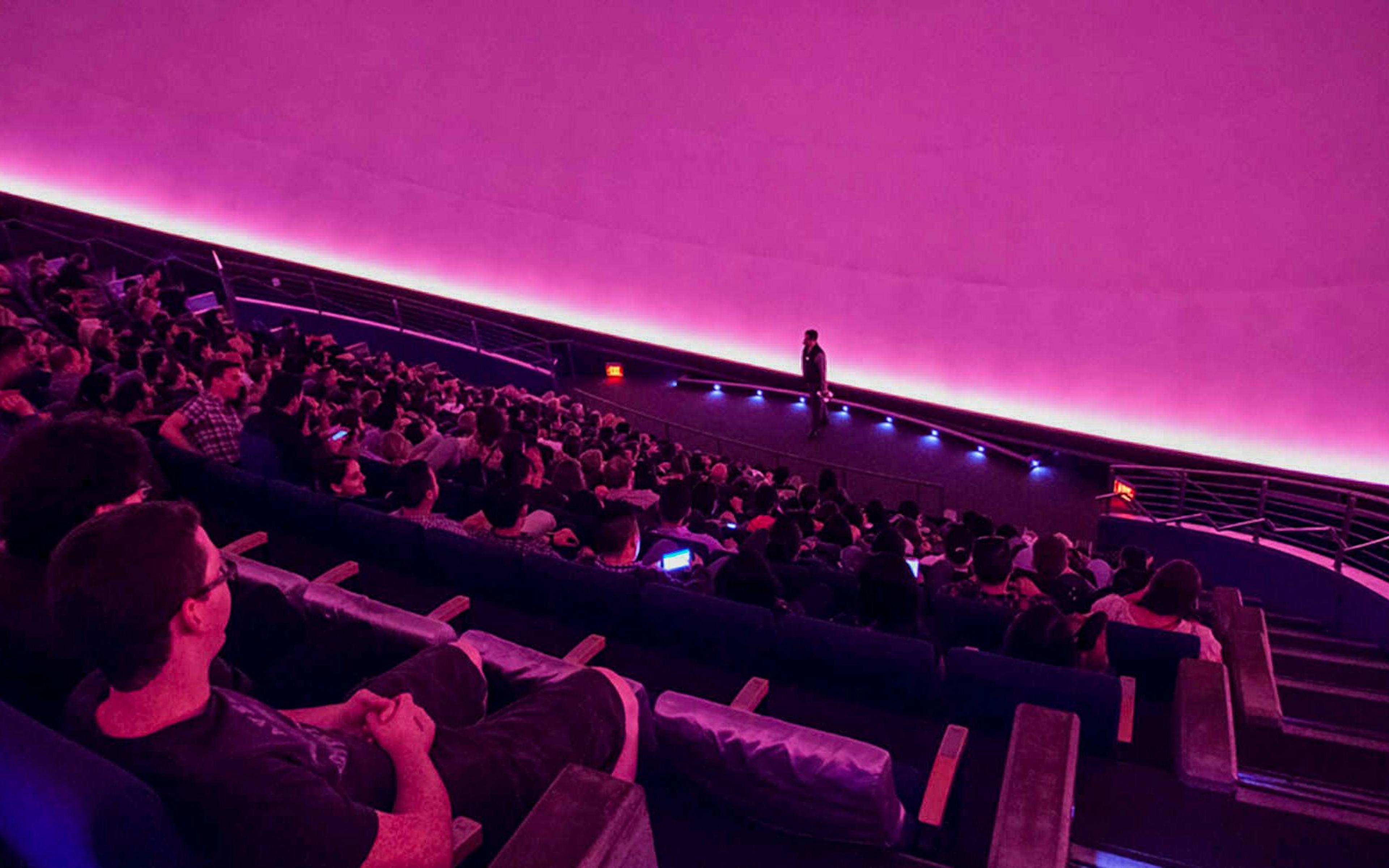
Reserved showtime experience under the 90-ft digital dome → budget 30–45 min including queue time and seat entry.
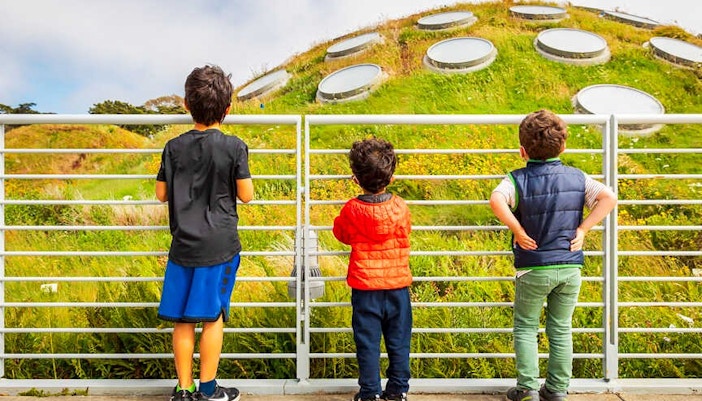
Living roof
Outdoor roofscape with views across Golden Gate Park → budget 15–20 min and save it for a clear-weather break.
Maps and navigation tools
- Map: On-site map and digital wayfinding cover the aquarium, planetarium, rainforest, and roof → grab one right after entry so you can route around your showtime.
- Signage: Signage is good for major exhibits, but it doesn’t solve timing decisions for you, so a simple mental route matters more than constant map-checking.
What happens inside California Academy of Sciences
Morrison Planetarium
Type: Digital dome theater
This is the Academy’s most structured experience, and it’s the one space that can quietly reshape your whole route because seats fill faster than most first-time visitors expect. The projection and sound are the point, but don’t miss the build-up in the queue and pre-show atmosphere — it’s where the museum shifts from gallery mode into full immersion.
Where to find it: Inside the central planetarium zone; reserve your showtime as soon as you enter the museum.
Rainforests of the World
Type: Four-story indoor rainforest dome
The rainforest dome is less about speed and more about looking slowly upward as you spiral through heat, humidity, and live vegetation. Most visitors focus on the obvious birds and butterflies, but the real payoff is how many animals are above eye level or tucked into foliage near the path rather than out in the open.
Where to find it: In the glass rainforest dome, reached from the main museum circulation route.
Steinhart Aquarium
Type: Live-animal aquarium
This is the densest part of the museum for both crowds and animal variety, with coral reef tanks, penguins, swamp habitats, rays, and thousands of smaller species. What people rush past are the quieter side tanks and lower-sightline displays between the big crowd magnets, which often hold the most unusual creatures without the shoulder-to-shoulder viewing.
Where to find it: On the lower level, directly linked into the museum’s main animal-exhibit circuit.
African Hall
Type: Natural history diorama gallery
African Hall gives the visit some breathing room after the movement and noise of the aquarium and rainforest. Many visitors treat it as a pass-through on the way elsewhere, but it’s one of the Academy’s strongest contrasts: classic natural history display, large-scale dioramas, and a slower pace that changes how the rest of the building feels.
Where to find it: On the main level near the museum’s central orientation spaces.
Living roof
Type: Sustainable roofscape and viewing area
The living roof is part architecture, part exhibit, and part reset button in the middle of a busy museum day. What most people miss is that it’s not just a photo stop — it helps you understand the building itself, and it’s one of the few places where the visit briefly opens outward instead of funneling you into the next interior queue.
Where to find it: Accessed from the upper circulation route on the main visitor path.
Earthquake Shake House
Type: Interactive simulator
This is one of the Academy’s easiest exhibits to underrate until you’re inside it. The simulator is short, but it lands because it translates California earthquake history into something physical and memorable rather than text-panel information, and many visitors skip it simply because it sits outside the museum’s main aquarium-rainforest-planetarium triangle.
Where to find it: In the interactive science exhibit area off the main museum route.
Facilities and accessibility
- 🅿️ Parking: Paid parking is available in the Music Concourse Garage, with the easiest driver access from 10th Avenue into Golden Gate Park.
- 🪑 Seating / rest areas: The best built-in breaks are the planetarium seating, slower gallery spaces like African Hall, and the outdoor pause on the living roof.
- 🍽️ On-site dining: Food is available on-site, which is useful because a full visit usually runs 3–4 hours and works best if you don’t break the route midway.
- ♿ Mobility: The museum is wheelchair accessible, and loaner wheelchairs are available, so you can cover the main exhibit route without depending on stairs.
- 👁️ Visual impairments: The easiest self-guided zones are the aquarium, rainforest, and African Hall, where scale, sound, and live-animal movement add context beyond wall text.
- 🧠 Cognitive and sensory needs: Weekday afternoons are usually the least overwhelming window, while late mornings are louder and more crowded around the aquarium, rainforest entrance, and hands-on exhibits.
- 👨👩👧 Families and strollers: The visit works well for strollers because it is indoors and zone-based, but the tightest pinch points are the planetarium queue and the rainforest dome entrance.
California Academy of Sciences is one of the easiest major San Francisco attractions to do with children because the visit keeps switching between animals, movement, and short-form science experiences.
- 🕐 Time: 2.5–3.5 hours is realistic with young children, and the aquarium, rainforest, and earthquake simulator usually hold attention best.
- 🏠 Facilities: The biggest practical advantage for families is having multiple indoor exhibit zones under one roof, so you can reset the day without leaving the building.
- 💡 Engagement: Let children lead one zone each — penguins, sharks, or the rainforest canopy — instead of trying to “complete” every gallery.
- 🎒 Logistics: Arrive early for the smoothest planetarium choices, bring layers because the rainforest dome feels much warmer than the rest of the museum, and skip oversized bags.
- 📍 After your visit: The Japanese Tea Garden is the easiest nearby add-on if you want fresh air and a slower second stop after a high-energy museum visit.
Rules and restrictions
What you need to know before you go
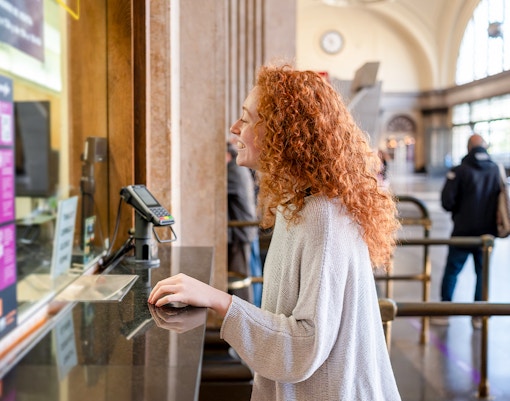
- A valid admission ticket is required for entry, and if the option includes daytime or NightLife access, you need to choose the right session when booking.
- Children under 4 years of age are not permitted inside the planetarium, so plan your route around that if you’re visiting with toddlers.
- Planetarium capacity is limited, which means the practical consequence of arriving late is often losing your preferred showtime rather than simply waiting a few extra minutes.
Not allowed
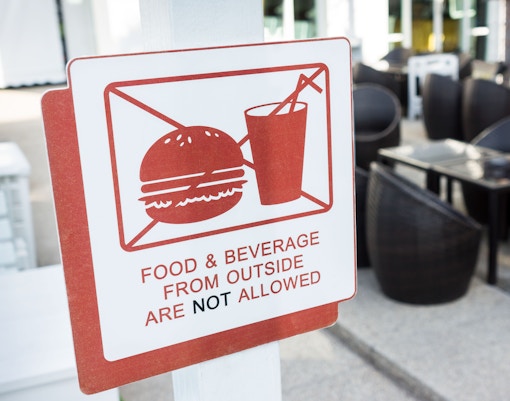
- 🚫 Outside food and drink rules are tighter inside exhibit spaces than in the surrounding park, so plan to eat before entry or use the on-site dining option.
- 🚬 Smoking and vaping are best treated as outside-only activities, not something to plan around once you are inside the museum.
- 🐾 Pets are not part of a standard museum visit, but service animals should follow the venue’s access rules.
- 🖐️ Touching animals, habitats, or exhibits outside designated interactive zones is restricted because this is a live-animal and collection-based museum, not a fully hands-on science center.
Photography
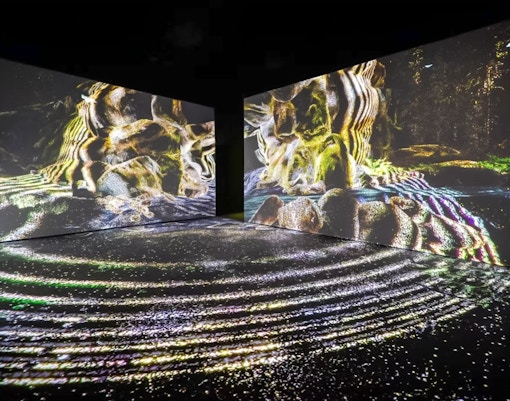
Photography is generally fine for personal use across most of the museum, especially in the aquarium, African Hall, living roof, and general exhibit areas. The main distinction is practical rather than decorative: crowded spaces like the planetarium entry and dark animal galleries are not good places for long setups. Flash, tripods, and selfie sticks are best assumed to be restricted in sensitive or high-traffic spaces, especially around live animals and timed show areas.
Good to know
- The single easiest mistake here is waiting too long to reserve your planetarium show, then discovering the rest of your route has to be built around the leftover time slots.
- Thursday NightLife changes the feel of the building completely, so don’t book it if you want a standard family museum visit.
Practical tips
- Book a timed entry at least a few days ahead for summer weekends, school holidays, and Thursday NightLife, because those are the dates when the easiest entry windows disappear first.
- Reserve your planetarium show as soon as you’re inside; it’s the one part of the visit that can force you into dead time if you leave it too late.
- Start with the aquarium if your showtime is later, because it absorbs crowds better than the rainforest dome and gives you something substantial to do while the building is still busiest.
- Save the living roof for the back half of your visit, when you’ll want fresh air and a visual reset after the darker indoor galleries.
- Visit after 2pm on weekdays if you care most about space, because that is when school-group traffic usually starts thinning out.
- Bring a light layer even on a warm day: the rainforest dome runs hot and humid, but the rest of the museum feels much cooler by comparison.
- Don’t over-pack. A compact day bag is easier to manage on ramps, in queues, and inside the lower-level aquarium than a full backpack.
- Eat either before you enter or after the late lunch rush, because stopping at the wrong point can break a visit that works best as one clean loop through the building.
What else is worth visiting nearby
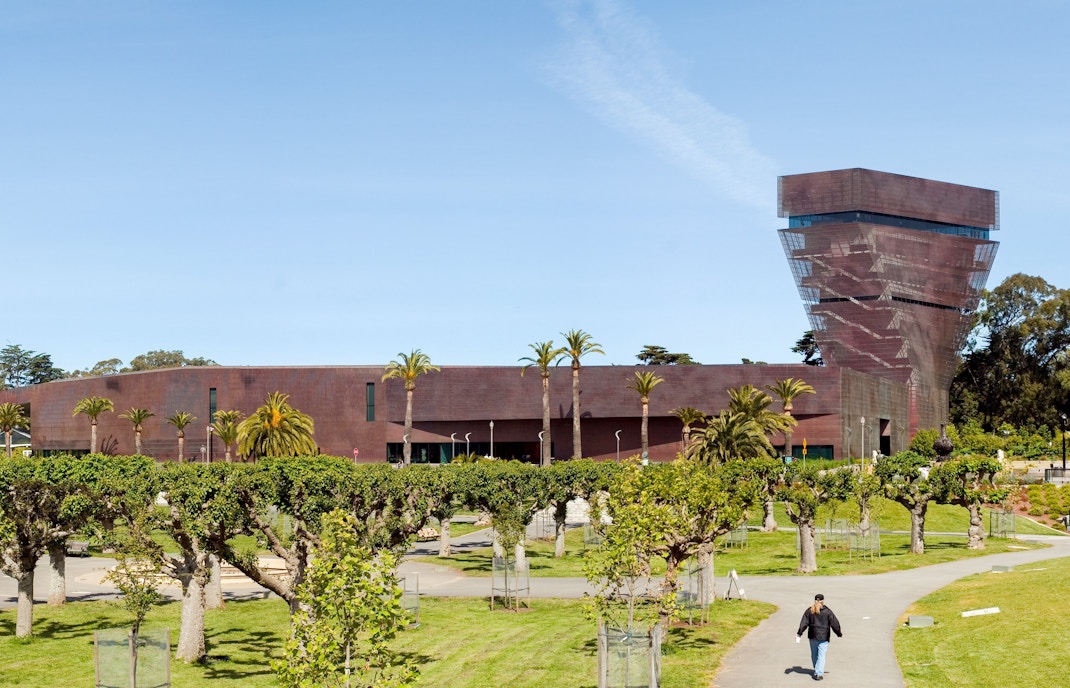
Commonly paired: de Young Museum
Distance: 100m — 2-min walk
Why people combine them: They sit side by side in the Music Concourse, so it’s one of San Francisco’s easiest same-day pairings if you want science in the morning and art or tower views later.
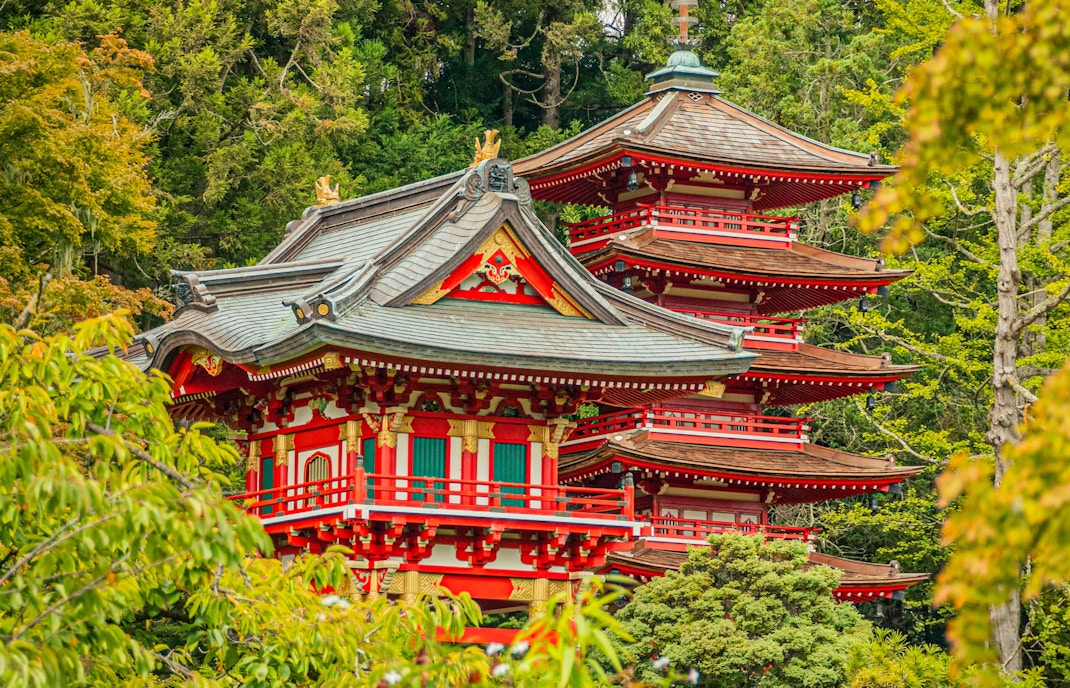
Commonly paired: Japanese Tea Garden
Distance: 250m — 4-min walk
Why people combine them: It’s the easiest way to slow the day down after a packed indoor visit, and the contrast between high-energy exhibits and quiet garden paths works especially well with families.
Eat, shop and stay near California Academy of Sciences
- On-site: Academy Café, casual salads, sandwiches, and kid-friendly options; expect mid-range museum pricing, and use it as a convenience move rather than a destination meal.
- de Young Café (3-min walk, 50 Hagiwara Tea Garden Dr): Light lunches, coffee, and the easiest sit-down option if you want to stay in the Music Concourse area.
- Arizmendi Bakery (15-min walk, 1331 9th Ave): Budget-friendly pastries, pizza slices, and coffee; best before your entry time if you want a quick, reliable start.
- Marnee Thai (15-min walk, 1243 9th Ave): A solid post-visit dinner option in the Inner Sunset if you want a proper meal after a long museum afternoon.
- 💡 Pro tip: If you visit on a weekday, eat after 2pm rather than at noon — the museum feels calmer then, and nearby spots are easier once the lunch rush and school-group window pass.
- Academy Store: Science kits, plush animals, books, and sustainability-themed gifts near the exit; best if you want something tied directly to the museum’s live-animal and science focus.
- de Young Museum Store: Art books, design-forward gifts, and better browsing than most museum shops; useful if you’re already pairing both attractions in one visit.
Golden Gate Park is peaceful, walkable, and great for a slower San Francisco trip, but it is not the most efficient base if this is your first time in the city. You stay here for park access and neighborhood calm, not for easy nightlife or the fastest transit connections to every headline sight.
- Price point: The area leans mid-range to upscale, with better value once you move toward the Inner Sunset rather than looking right on the park edge.
- Best for: Visitors who want early park access, families who prefer a quieter neighborhood, and anyone planning to pair the Academy with other Golden Gate Park stops.
- Consider instead: Union Square or Fisherman’s Wharf for a shorter first-time city stay, or the Inner Sunset if you want to stay near the park without giving up everyday food and transit options.
Frequently asked questions about visiting California Academy of Sciences
Most visits take 3–4 hours. That is enough time to do the aquarium, rainforest dome, African Hall, living roof, and one planetarium show without rushing every transition. If you want to linger in the aquarium or repeat favorite galleries, you can easily spend 4.5 hours or more.
Yes, it is smart to book in advance if you’re visiting on a summer weekend, school holiday, or Thursday NightLife. Advance booking matters less on quieter weekday afternoons, but it still gives you a cleaner start and avoids arriving to a less convenient timed-entry window.
It can be worth it on peak dates, but it is not essential for every visit. The bigger time-saver here is not just entry speed — it is getting inside early enough to secure the planetarium showtime you actually want before those reservations fill.
Aim to arrive 15–20 minutes before your timed entry. That gives you enough time for entry procedures and puts you in a good position to reserve a planetarium show before the most popular slots are gone.
Yes, a normal day bag or backpack is usually manageable, but smaller is easier. This museum works best when you move freely between ramps, queues, and crowded aquarium zones, so travel light if you can.
Yes, personal photography is usually allowed in most public areas of the museum. The biggest limits are practical ones: dark spaces, live-animal areas, and high-traffic zones are not good places for flash or bulky gear.
Yes, the museum works well for groups, but timing matters. Late-morning congestion builds faster with school groups and family clusters, so adults traveling together usually have a smoother time on weekday afternoons or with an early pre-booked entry.
Yes, it is one of San Francisco’s easiest big-ticket family attractions. The mix of penguins, sharks, rainforest wildlife, and short-format science experiences keeps children engaged better than a single-theme museum, though children under 4 cannot enter the planetarium.
Yes, the museum is wheelchair accessible. Loaner wheelchairs are also available, which makes a big difference at a multi-level attraction where most visitors spend 3–4 hours moving between major zones.
Yes, you have both on-site and nearby options. The simplest nearby cluster is the Inner Sunset, about a 15-minute walk away, while the easiest low-friction option is to eat on-site and keep your museum route intact.
No, children under 4 are not permitted inside the planetarium. If you’re visiting with toddlers, plan around that limit early so one adult is not forced to improvise while the rest of your group heads into a reserved show.
No, Thursday NightLife is an adults-only evening format with a very different atmosphere. It runs from 6pm–10pm, is designed for guests 21 and over, and works better as a social night out than as a standard first-time family visit.