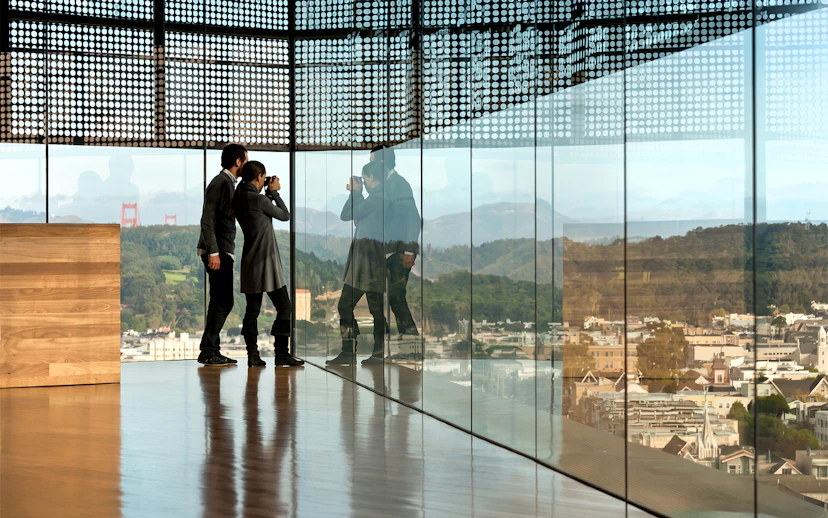
Visit de Young Museum in San Francisco
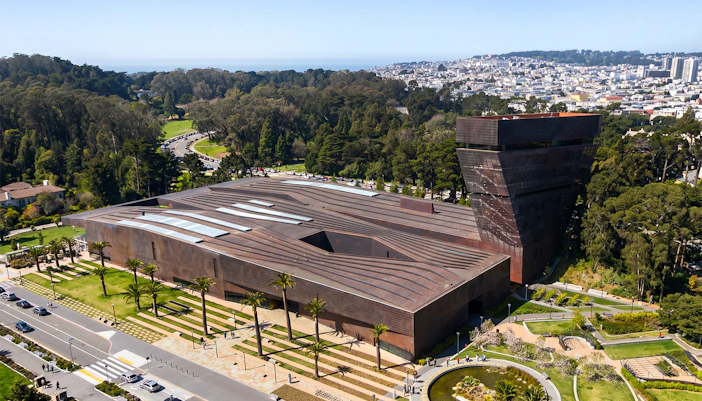
The de Young Museum is Golden Gate Park's main fine arts museum, best known for its American art collection, global textiles, and the free Hamon Observation Tower. It is bigger than many first-time visitors expect, spread across multiple gallery levels, and it gets noticeably busier on free days and summer weekends. The biggest difference between a rushed visit and a good one is timing the tower and any special exhibition before the late-afternoon cutoff. This guide covers the hours, entry setup, route, and practical details that matter.
Quick overview: de Young Museum at a glance
If you want the shortest version first, these are the planning details that most change the day.
- When to visit: Tuesday-Sunday: 9:30am-5:15pm. Tuesday or Wednesday after 2pm is noticeably calmer than Saturdays and first Tuesdays from 11am-2pm, because free-admission traffic and peak park footfall build fast by late morning.
- Getting in: From $20 for standard adult admission. Special exhibition tickets cost extra, and the de Young Museum Tour is sold separately from admission, so advance booking matters most for blockbuster shows and free-admission days.
- How long to allow: 2-4 hours for most visitors. The visit stretches toward the longer end if you add the tower, the sculpture garden, and a paid special exhibition.
- What most people miss: The international textiles and costumes galleries and the Barbro Osher Sculpture Garden make the visit richer, but many visitors rush past both on the way to the tower.
- Is a guide worth it: A guide is most useful if your visit centers on a special exhibition like Monet and Venice; for the permanent collection, a good Audioguide usually gives enough context for less.
🎟️ Special exhibition slots for de Young Museum can sell out in advance during major shows and free-admission days. Lock in your visit before the time you want is gone.
Jump to what you need
🕒 Where and when to go
🗺️ Getting around
♿ Facilities and accessibility
Where and when to go
How do you get to the de Young Museum
The de Young sits inside Golden Gate Park, near the Music Concourse, about 5 mi west of downtown San Francisco and within walking distance of several park attractions.
Address: 50 Hagiwara Tea Garden Dr, San Francisco, CA 94118, United States | Find on Maps
- Bus: MUNI 5 Fulton → 25th Avenue stop → about 12 min walk → Best if you are coming from central San Francisco.
- Bus: MUNI44 O'Shaughnessy → John F. Kennedy Drive stop → about 10 min walk → Closest useful option for a direct park approach.
- Streetcar: N Judah → 28th Avenue/Irving → about 12 min walk → A practical option if you are coming from downtown or the beach side.
- Taxi/rideshare: de Young Museum entrance → direct drop-off → Easiest if you want to avoid park walking or are arriving with children.
- Parking: Street parking around Golden Gate Park → varies by day → Arrive early on weekends because nearby spaces fill quickly.
Which entrance should you use
The museum uses one main public entrance, and the mistake most visitors make is assuming the tower has its own separate outside access. It does not: you still start through the main building.
- Main entrance: Located on the south side facing John F. Kennedy Drive and the Music Concourse. Expect the longest waits from late morning to early afternoon on Saturdays, first Tuesdays, and busy summer dates.
When is de Young Museum open
- Tuesday-Sunday: 9:30am-5:15pm
- Monday: Closed
- Last entry: 4:30pm
- Hamon Observation Tower: 9:30am-4:30pm
When is it busiest: Saturdays, first Tuesdays, and summer visits from 11am-2pm are the hardest window because free-admission traffic and park visitors stack up at the same time.
When should you actually go: Tuesday or Wednesday after 2pm usually gives you lighter gallery traffic and a calmer tower run once the midday rush has thinned.
How do you get around de Young Museum
Layout and suggested route
The de Young is a multi-level museum rather than a single linear loop, so it is easy to self-navigate but also easy to miss a full wing if you keep drifting toward the tower.
- Ground floor: Textiles and costumes galleries + quieter world arts displays + about 30-45 min.
- First and second floors: American art galleries from the 17th to 20th centuries + the strongest permanent collection highlights + about 60-90 min.
- Special exhibition galleries: Rotating major shows on the main gallery levels + the biggest variable in visit length + about 45-90 min.
- Tower level: Hamon Observation Tower + skyline views rather than artworks + about 15-30 min.
Suggested route: Start with the permanent galleries, add the special exhibition in the middle if you booked one, and finish with the tower so you do not have to keep checking the 4:30pm cutoff while you are inside the art collection.
Maps and navigation tools
- Map: Pick up the gallery map at the lobby desk so you can separate the permanent collection, special exhibition spaces, and tower into one clean route from the start.
- Signage: Main wayfinding is good enough for the tower and biggest galleries, but the building's angled layout makes side rooms easier to miss than many visitors expect.
- Audio guide/app: The on-site Audioguide costs about $8 and adds useful context if you want more than labels without committing to a docent-led session.
💡 Pro tip: Save the Hamon Observation Tower for the end, but not the very end - it closes at 4:30pm, which is 45 min before the museum itself.
Must-see galleries & attractions at de Young Museum
Hamon Observation Tower
Attribute - Architecture/viewpoint: 144-foot observation tower
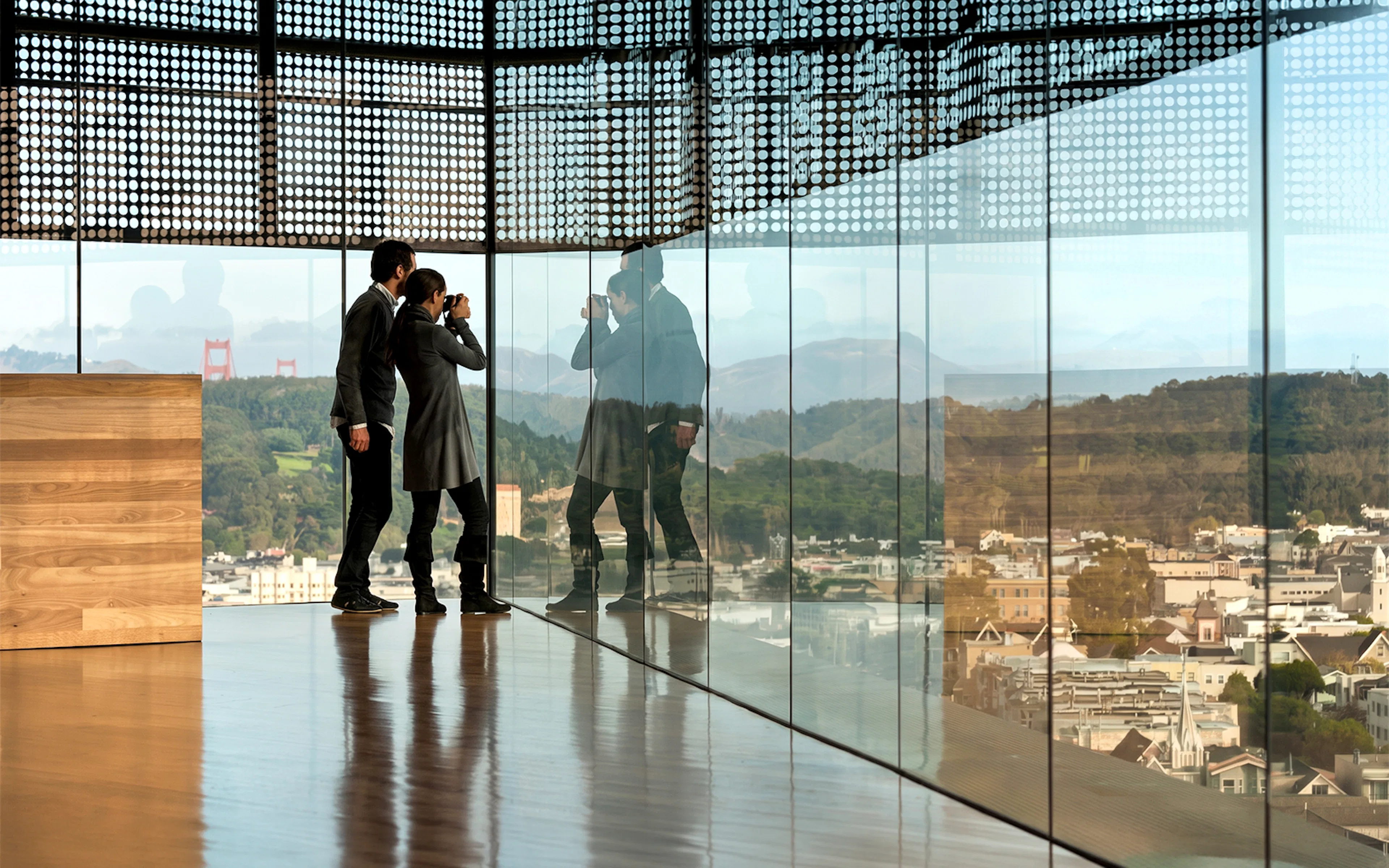
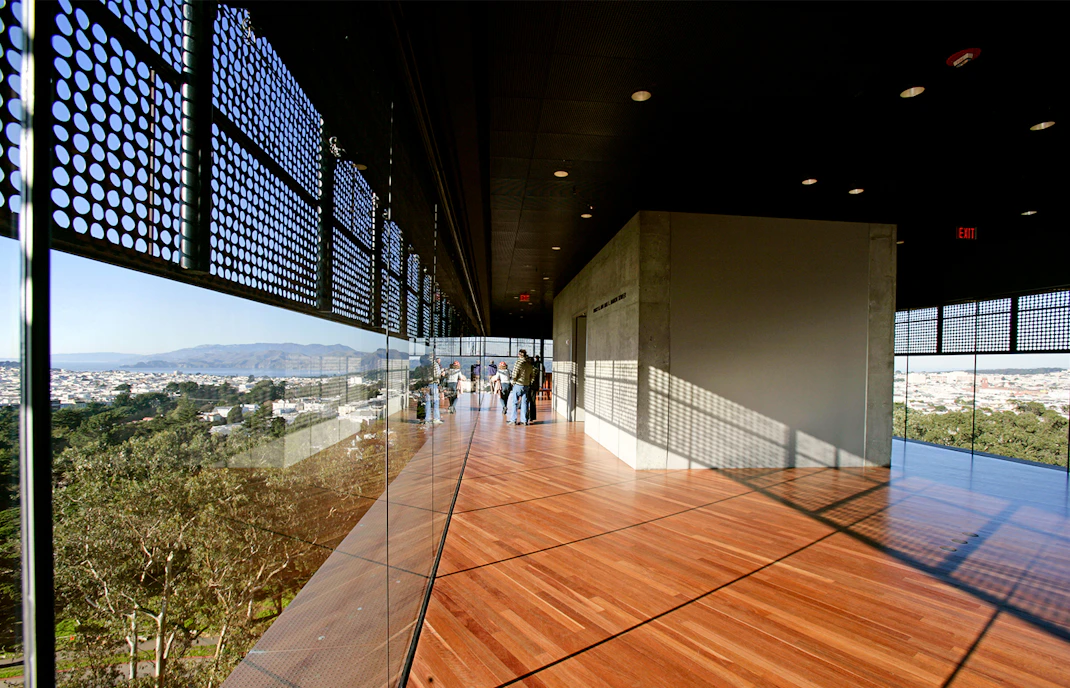
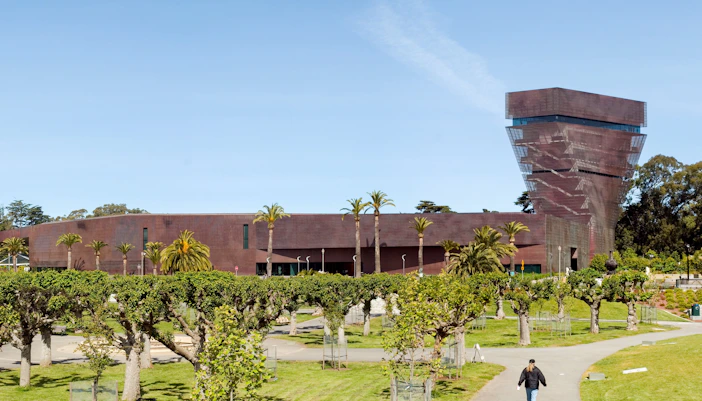
This is the de Young's most unusual feature because it is a museum stop that behaves like a city lookout. The view is the payoff, with clear sightlines over Golden Gate Park, the city grid, and, on a good day, the Golden Gate Bridge and Marin headlands. What many visitors miss is the timing: the tower closes at 4:30pm, so leaving it too late is the easiest way to lose it.
Where to find it: Upper tower elevators inside the museum; access runs during museum hours until 4:30pm.
American art galleries
Attribute - Era: 17th-20th century American art
These galleries are the core of the museum and the reason many art-focused visitors come in the first place. They give you the strongest sense of the de Young's identity, especially through the Rockefeller gift and its depth in American painting. What people often rush past are the far wings and later rooms, where the pace slows and the collection feels less crowded.
Where to find it: Across the main first- and second-floor gallery levels.
International textiles and costumes
Attribute - Collection type: Global textiles and dress
This is one of the museum's most distinctive holdings, and it is also one of the easiest to underestimate if you come in expecting only paintings. The reward here is not scale but detail - woven techniques, ceremonial dress, and design traditions that read differently once you slow down. Many visitors cut it short because the rooms feel quieter than the headline galleries.
Where to find it: Ground-floor and lower main-level galleries.
Barbro Osher Sculpture Garden
Attribute - Format: Outdoor sculpture garden
The sculpture garden is the best place to reset your pace without fully ending the museum visit. It adds light, air, and a different viewing rhythm after long gallery stretches, and it is worth more than a rushed photo stop. What gets missed is that you do not need to treat it as an afterthought - it works especially well as a break before the tower or café.
Where to find it: Directly outside the museum on the Music Concourse side.
Monet and Venice exhibition
Attribute - Exhibition type: Special exhibition
If this show is running during your visit, it is the clearest case for planning ahead because it changes both your ticket choice and your route. The works make more sense when you understand that the exhibition focuses on Monet's view of Venice rather than a general Impressionist survey. Many visitors also miss that the docent-led de Young Museum Tour covers this show only, and museum admission is still separate.
Where to find it: Special exhibition galleries on the museum's main exhibition levels; confirm the exact gallery at the lobby desk.
Facilities and accessibility
- 🎒 Cloakroom/lockers: Large bags and backpacks must be checked at the coatroom, and space is limited on busy days.
- 🚻 Restrooms: Restrooms are available inside the museum, and family visitors can use changing-table facilities during the visit.
- 🍽️ Café: The lobby café is the easiest food stop before or after the galleries, but food and drink are not allowed past the lobby.
- 🛍️ Gift shop/merchandise: The museum store sits off the lobby and is worth saving for the end if you want exhibition books, art gifts, or design-focused souvenirs.
- 🪑 Seating/rest areas: The café area and sculpture garden are the best natural pause points if you want a break between galleries.
- 🅿️ Parking: There is no simple on-site museum parking setup to rely on, so most drivers use street parking around Golden Gate Park and should arrive early on weekends.
- ♿ Mobility: The museum is almost entirely wheelchair accessible, with elevators to all public gallery floors and smooth access to the tower and sculpture garden paths.
- 👁️ Visual impairments: The Audioguide is the main spoken support option surfaced for the galleries, and it is the most useful add-on if you want more interpretation without joining a group.
- 🧠 Cognitive and sensory needs: The calmest visit windows are usually Tuesday or Wednesday afternoons, while first Tuesdays, Saturdays, and the midday summer rush are the loudest and most crowded.
- 👨👩👧 Families and strollers: Elevators and level public routes make stroller use practical across the main visit path, and the public areas are easier to manage than many older museums.
The de Young works best for children when you treat it as a focused 2-3 hour visit built around a few strong stops rather than a full museum marathon.
- 🕐 Time: Around 2 hr is realistic with younger children, and the best priorities are the tower, the sculpture garden, and one or two gallery sections instead of every floor.
- 🏠 Facilities: Elevators, stroller-friendly public routes, restrooms, and changing-table facilities make the museum easier for families than its scale first suggests.
- 💡 Engagement: The textiles and costumes rooms usually hold attention better than a long run of paintings because there is more visual variety from case to case.
- 🎒 Logistics: Bring only a small bag if you can, time the tower before 4:30pm, and avoid first Tuesdays or free Saturdays if your child does not do well in queues.
- 📍 After your visit: The Japanese Tea Garden is the simplest family-friendly follow-up because it is only a short walk away and gives everyone a slower outdoor reset.
Rules and restrictions
What you need to know before you go
- Entry: Timed museum admission or a valid member ticket is the standard way in, and special exhibitions may need their own paid access.
- Bags: Large bags and backpacks must be checked at the coatroom, so a smaller day bag makes entry smoother.
- Tower timing: The Hamon Observation Tower stops admitting visitors at 4:30pm, even though the museum itself stays open later.
Not allowed
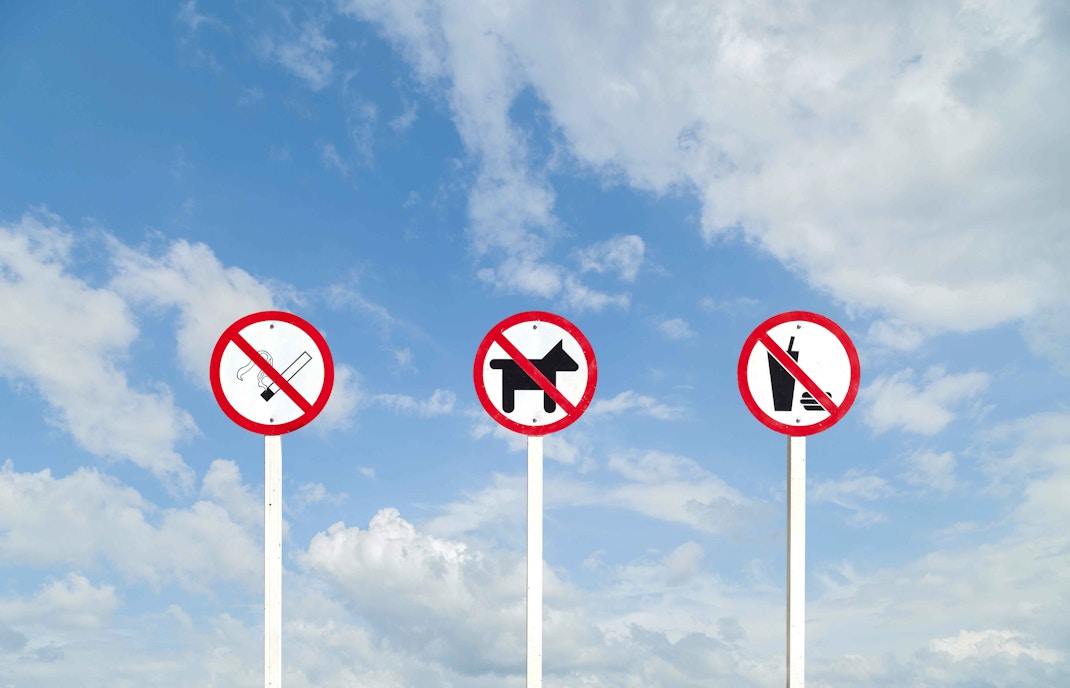
- 🚫 Food and drink: Food and drink are not allowed in the galleries, so finish coffee and snacks in the lobby café area.
- 🚬 Smoking / vaping: Smoking and vaping are not part of the indoor museum experience and should be kept outside museum spaces.
- 🐾 Pets: Pets are not part of the standard museum visit; only service-animal access should be assumed.
- 🖐️ Touching exhibits: Do not touch artworks, cases, or sculpture displays, because the collections include fragile historic materials and textiles.
Photography
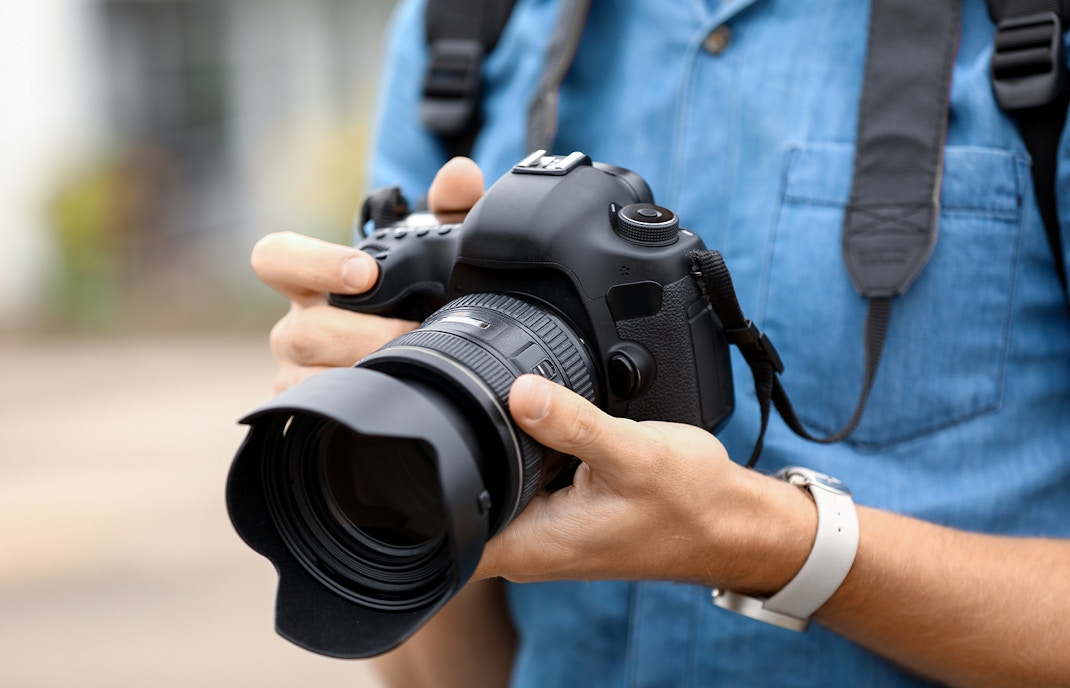
Personal photography without flash is generally allowed in the museum, but tripods and other intrusive setups are not part of the standard gallery experience. The most important distinction is not between floors but between permanent collection spaces and any special exhibition with its own extra rules, so check the posted signs once you enter the show. If you want quick photos, the sculpture garden and tower are the easiest places to do that without slowing other visitors.
Good to know
- Free days: First Tuesdays and Bay Area resident Saturdays are the longest-line days, so they are best for budget visits rather than calm ones.
- Tower access: The tower is free, but it still runs through the museum entrance process, so it is not a separate street-level shortcut.
Practical tips
- Booking and arrival: Book ahead if your visit depends on a special exhibition, but standard admission is much easier to do same-day outside summer and free-admission dates; if you want the calmest start, arrive at opening or after 2pm on a weekday.
- Pacing: Do not start with the tower just because it is famous - the better rhythm is galleries first, tower second, because the 4:30pm cutoff matters more than people expect.
- Crowd management: Tuesdays and Wednesdays outside summer are your friend here, and the difference is strongest after the midday rush when the museum feels far less compressed.
- What to bring or leave behind: Bring a small bag and leave bulky backpacks behind if possible, because large bags must be checked and that adds friction at the start of the visit.
- Food and drink: Eat before you enter the galleries or plan a proper stop at the lobby café after, since you cannot carry drinks through the collection and stepping out breaks the flow of the visit.
- Free-day strategy: Use first Tuesdays or free Saturdays only if price matters more than pace; if your priority is a relaxed museum day, paying for a normal mid-week slot is usually the better trade.
What else is worth visiting nearby
Commonly paired: California Academy of Sciences
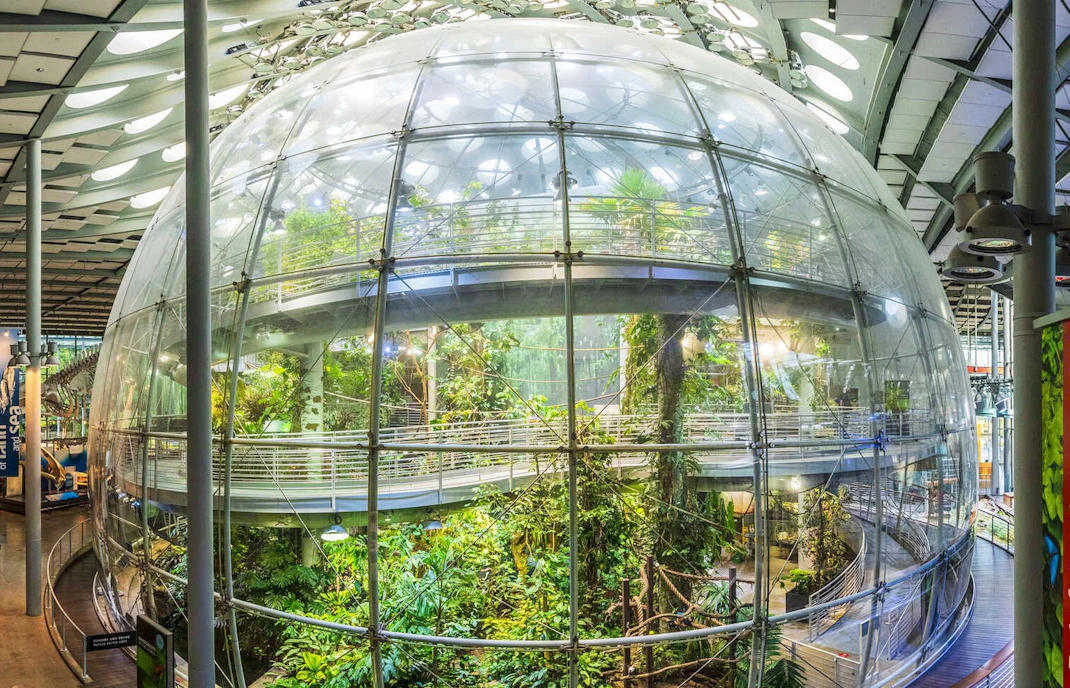
Distance: 0.5 mi - 10 min walk
Why people combine them: It is the easiest same-park pairing if you want one art stop and one science-heavy stop without adding extra city transit.
Commonly paired: Japanese Tea Garden
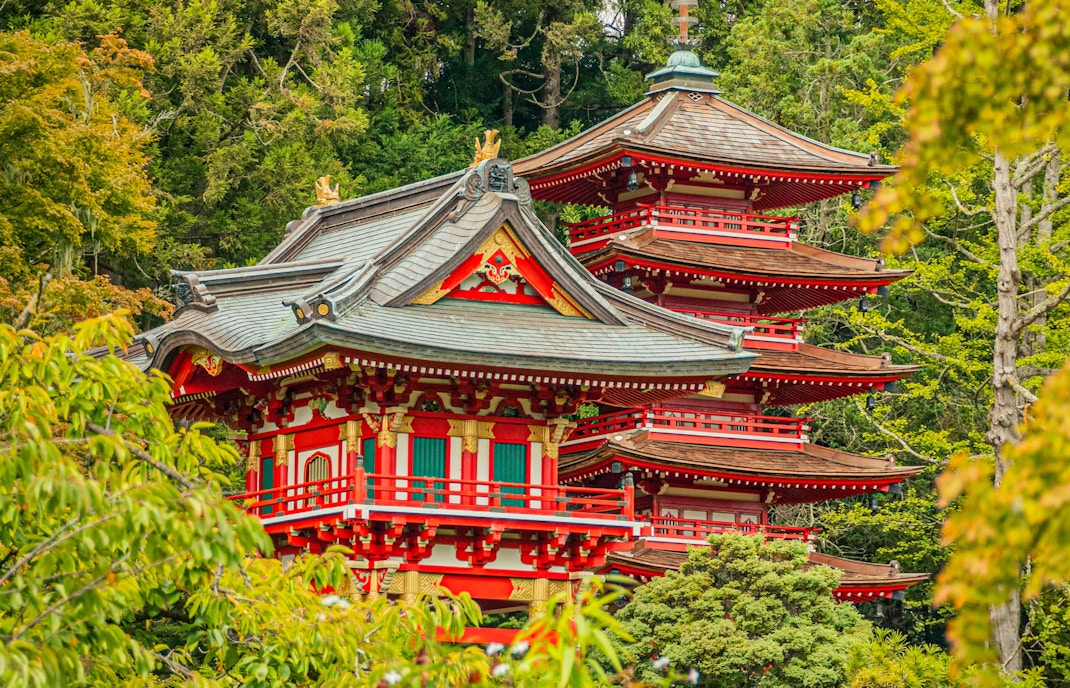
Distance: 0.1 mi - 2 min walk
Why people combine them: It gives you a quiet outdoor reset right after the galleries, and the short walk makes it the cleanest add-on for a half-day park plan.
Eat, shop and stay near de Young Museum
- On-site: Bar Café in the lobby is the most convenient option for coffee, light food, and a quick reset, but it works better as a practical stop than a destination meal.
- Japanese Tea Garden (2-min walk, Golden Gate Park): A calmer follow-up than the museum café if you want tea and a quieter outdoor setting right after your visit.
- California Academy of Sciences café (10-min walk, Music Concourse area): Useful if you are combining attractions and want to keep your meal break inside the park instead of leaving it.
- Inner Sunset on Irving Street (short transit or longer walk, south of Golden Gate Park): Best if you want more choice and better value than a museum café after you finish the park portion of the day.
- 💡 Pro tip: Eat after the galleries, not in the middle of them - the tower, sculpture garden, and lobby café make a much cleaner finish than breaking the visit too early.
- de Young Museum Store: Best for exhibition catalogs, art books, and design-forward gifts, and it is easy to browse at the end because it sits off the lobby.
- California Academy of Sciences store: Worth a look only if you are pairing both museums and want science-focused gifts for children in the same park outing.
Staying near Golden Gate Park works best if your priority is a quieter base with easy park access, not if you want to be close to the city's densest dining and nightlife. For a short San Francisco trip, the museum area is better as a day stop than as the smartest default base.
- Price point: Lodging around the park tends to feel more residential than central, so convenience to the de Young comes with fewer same-block tourist services.
- Best for: Visitors who want early park access, slower mornings, and less downtown bustle.
- Consider instead: Union Square or Fisherman's Wharf make more sense for first-time visitors who want broader sightseeing access, while a stay nearer Golden Gate Park / Inner Sunset suits park-focused repeat visitors better.
Frequently asked questions about visiting de Young Museum
Most visits take 2-4 hours, depending on whether you add the Hamon Observation Tower, the sculpture garden, and a special exhibition. If you only want the permanent-collection highlights and the view, 2-2.5 hr is realistic. A fuller museum day with a paid exhibition usually lands closer to 4 hr.
You do not always need to book ahead for standard admission, but it is the safer move for special exhibitions, free-admission days, and busy summer weekends. The permanent collection is easiest to visit spontaneously on an off-peak weekday. If a blockbuster show is part of your plan, do not leave it to the day of your visit.
It is worth thinking about only on the busiest days, because the real pain point here is the ticket line, not a separate fast-track security experience. Peak waits can stretch close to an hour on free days and summer weekends, while quieter weekdays can feel almost walk-in. If timing matters more than saving a little money, faster entry has value.
Arrive about 15-20 min early if you have timed admission, especially on Saturdays, first Tuesdays, or a major exhibition date. That gives you a buffer for ticket checks and security without forcing a long wait outside. If you are only visiting the tower, the same busy-day timing logic still applies.
Yes, but large bags and backpacks must be checked at the coatroom rather than carried through the galleries. A small day bag is the easiest option because it gets you moving faster once you are inside. If you are planning a park day before or after the museum, pack lighter than you think you need.
Yes, personal photography without flash is generally allowed, but tripods and other bulky setups are not part of the standard gallery rules. The one place to stay alert is inside special exhibitions, where photography rules can change by show. Posted signage inside the exhibition space is the rule that matters most.
Yes, but a group visit works best if you decide in advance whether you want a self-guided museum day or a structured exhibition-led experience. The de Young Museum Tour is the clearest guided option in the current Headout inventory, and it focuses on Monet and Venice rather than the full museum. Larger groups should also expect slower entry on busy dates.
Yes, as long as you plan it as a focused museum visit instead of trying to do every room. The tower, sculpture garden, and textiles galleries are usually the strongest family stops, and children up to the age of 17 years get free general admission. For younger children, 2 hr is usually a better target than a full half-day.
Yes, almost the entire museum is wheelchair accessible, including the public gallery floors, elevators, tower access, and sculpture garden routes. That makes it easier than many older museums with split-level circulation. The only practical caution is busy-day crowding, which can make elevators and entry areas slower than the architecture itself.
Yes, there is a café in the lobby, and the museum is surrounded by easy Golden Gate Park add-ons if you want to eat before or after. Inside the galleries, food and drink are not allowed, so the café works best as your main on-site option. The Japanese Tea Garden is the simplest nearby alternative on foot.
Yes, the Hamon Observation Tower is free and does not require museum admission. You still enter through the building and should go during tower operating hours, which normally end at 4:30pm. The mistake people make is assuming they can leave this until the end of the day, only to find the tower closed before the museum does.
Expect a cheaper visit and a busier one. First Tuesdays and Bay Area resident Saturdays bring the heaviest entry lines, tighter galleries, and less flexibility if you also want a timed special exhibition. If your goal is a calm museum day, a paid weekday ticket is usually the better trade.
More reads
About
Timings