Plan your visit to SFMOMA in San Francisco
The San Francisco Museum of Modern Art is a seven-floor museum best known for its modern and contemporary collection, large-scale installations, and striking building. It’s rewarding, but it can also feel bigger and more fragmented than first-time visitors expect, especially if you wander without a plan. The biggest difference between a rushed visit and a good one is route order: start high, work down, and save time for the terrace and Living Wall. This guide covers timing, tickets, layout, and practical visit tips.
Quick overview
If you want the shortest version first, this is what changes the visit the most.
- When to visit: Thursday–Tuesday, 10am–5pm. Weekday mornings right after opening are noticeably calmer than first Thursdays and weekend afternoons, because free-admission visitors and special-exhibition traffic build later in the day.
- How long to allow: 3–4 hours works best for most visitors. It stretches toward the longer end if you stop for labels, photography, the terrace, or family spaces.
- What most people miss: The Living Wall, the upper-floor terrace, and the Calder room are the easiest places to rush past, even though they change the pace of the visit.
- Is a guide worth it? Yes if you want context fast or feel overwhelmed by seven floors, but a self-guided route works well if you mainly want the Fisher Collection, Sequence, and the terrace.
Jump to what you need
🕒 Where and when to go
🗓️ How much time do you need?
🎟️ Which ticket is right for you?
🗺️ Getting around
🖼️ What to see
♿ Facilities and accessibility
Where and when to go
How do you get to SFMOMA?
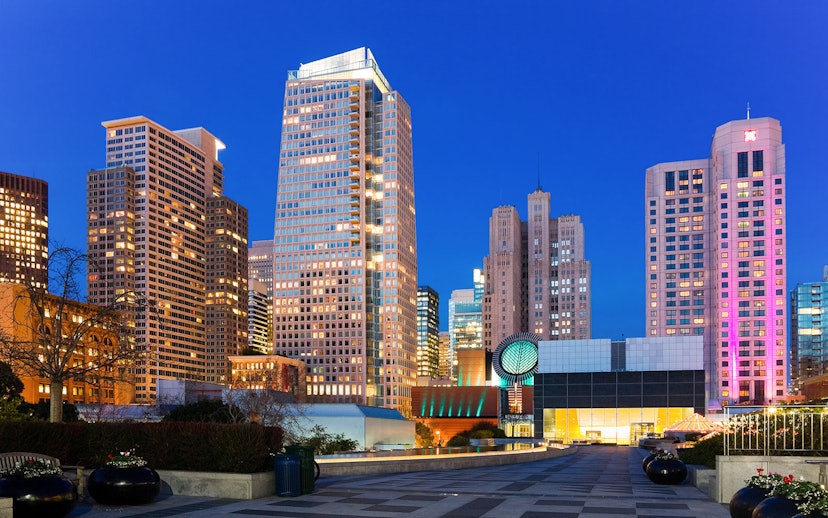
SFMOMA sits in SoMa near Yerba Buena Gardens, about a 10-minute walk south of Union Square and a short walk from Montgomery Street transit connections.
Address: 151 3rd Street, San Francisco, CA 94103 | Find on Maps
- BART: Montgomery Street Station → 6-minute walk → easiest downtown rail option from Market Street.
- Muni Metro: Montgomery Street stop → 6-minute walk → useful if you’re already moving between Embarcadero, Union Square, and downtown.
- Bus: Market Street routes → 5–7-minute walk → a good choice if you want the flattest approach.
- Taxi/rideshare: Third Street drop-off → 1–2-minute walk → easiest if you’re arriving with kids or limited energy.
Which entrance should you use?
SFMOMA uses one main entrance, but first-time visitors often lose time by joining the walk-up desk line when they already have a timed ticket.
- Pre-booked tickets: For timed-entry visitors. Expect 0–10 minutes during weekday mornings and 10–20 minutes on weekend afternoons.
- Walk-up/ticket desk: For same-day purchases, membership questions, and exhibition add-ons. Expect 10–25 minutes on busier afternoons.
When is SFMOMA open?
- Thursday–Tuesday: 10am–5pm
- Wednesday: Closed
- First Thursday of the month: Free admission for Bay Area residents, with heavier traffic than a standard weekday
- Last entry: Around 30 minutes before closing works best if you want more than a quick look
When is it busiest: Weekend afternoons, first Thursdays, school breaks, and big special-exhibition days feel the most crowded, especially in signature installation rooms and on the lower floors.
When should you actually go? Arrive right at opening on a weekday, then head up first, because the upper galleries and terrace stay quieter longer than the lobby-level highlights.
How much time do you need?
| Visit type | Route | Duration | Walking distance | What you get |
|---|---|---|---|---|
Highlights only | Floor 1 Sequence → Floor 3 Living Wall → Floor 5 Fisher galleries → Floor 7 terrace → exit | 2–2.5 hrs | ~1 km | You’ll cover the museum’s biggest visual moments, but you’ll skip slower photography, design, and family-focused spaces. |
Balanced visit | Floor 1 Sequence → upper-floor galleries → Calder room → Living Wall → Fisher Collection → terrace → return via lower floors | 3–4 hrs | ~2 km | This gives you the signature works, a better sense of the collection, and time for one real pause without feeling rushed. |
Full exploration | All seven floors + Fisher Collection + photography galleries + Koret Education Center + Living Wall + terrace + free ground-floor spaces | 4.5+ hrs | ~3 km | You’ll see the museum properly rather than sampling it, but gallery fatigue is real by the final floors unless you build in breaks. |
How do you get around SFMOMA?
Layout and route
SFMOMA is a sprawling, multi-floor museum rather than a simple loop, so it’s easy to waste time doubling back if you move without a plan. It’s manageable on your own, but it works best when you choose your route by priorities, not floor order.
- Floor 1: Lobby, Sequence, ticketing, store, and free public spaces, budget 20–30 minutes.
- Floor 2: Family and education spaces, plus lower galleries, budget 2,40 minutes.
- Floor 3: The Living Wall and nearby galleries, budget 30–45 minutes.
- Floor 5: Fisher Collection highlights, Guglie, Vortex, and a natural café break point, budget 45–60 minutes.
- Floor 7: Outdoor terrace, sculpture, and city views, budget 20–30 minutes.
Suggested route: Take the elevator up early, work downward through the quieter upper floors, and leave Sequence for later if needed; most visitors do the reverse and hit their energy dip before the terrace and calmer galleries.
Maps and navigation tools
- Map: Pick up the printed museum map at the entry or pull up the digital version before you arrive.
- Signage: Floor-to-floor wayfinding is decent, but it won’t tell you what’s worth skipping on a short visit.
- Audio guide/app. Most: Useful for added context on key works and exhibitions if you want more depth without joining a fixed group.
💡 Pro tip: Photograph the map before you head upstairs. Most first-time visitors don’t lose time in the galleries; they lose it deciding where to go next in the lobby.
Where are the masterpieces inside SFMOMA?
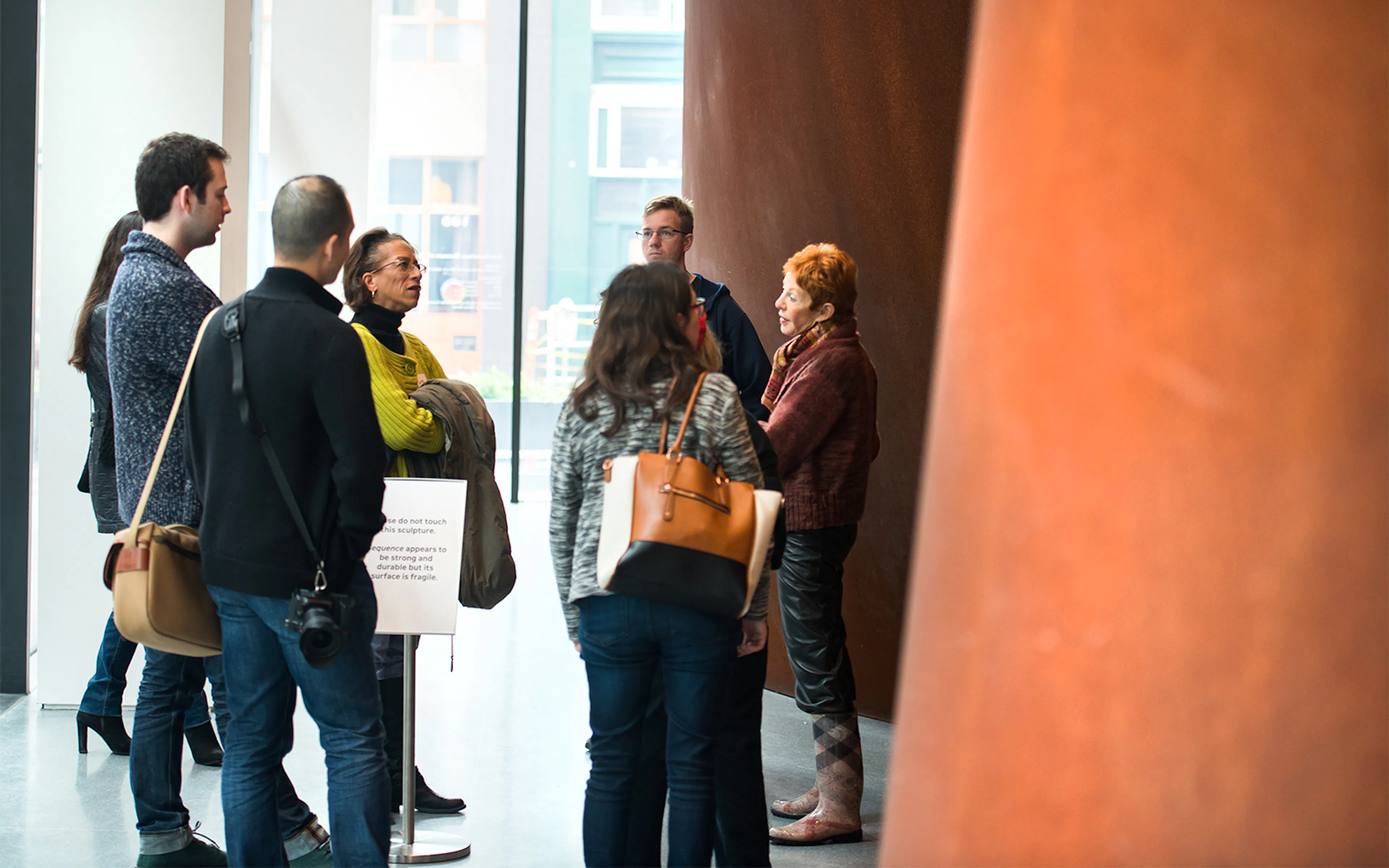
Sequence
Artist: Richard Serra
This is one of SFMOMA’s defining works: a massive walk-through steel installation that feels more like architecture than sculpture. It’s worth slowing down for the way the curved walls change your balance, sightlines, and sense of scale as you move through it. Most visitors look once from the edge, take a photo, and keep going, but the real experience is inside the turns.
Where to find it: Just off the main lobby on Floor 1.
The Living Wall
Designer: Patrick Blanc
The Living Wall is a 30-by-150-foot planted installation with thousands of California-native species, and it changes the pace of the museum more than almost any gallery. It’s one of the best places to pause mid-visit, especially if you’ve been moving quickly through the Fisher galleries. Most visitors register it as a backdrop, but the seasonal color changes and quiet seating are part of the experience.
Where to find it: Third-floor patio area beside the indoor galleries.
Calder’s mobiles in the Motion Lab
Artist: Alexander Calder
This gallery feels lighter and more playful than many of the denser modern-art rooms, which is exactly why it lands so well in the middle of a long visit. The mobiles respond to air movement, so even subtle shifts in the room can make them feel newly alive. Most people admire the color and move on, but the small motion changes are what make the room memorable.
Where to find it: Upper galleries in the dedicated Motion Lab area.
Fisher Collection galleries
Collection: Doris and Donald Fisher Collection
If you want the clearest sense of SFMOMA’s depth, spend real time here rather than treating it as a checklist of famous names. These rooms hold some of the museum’s strongest painting and sculpture, including major postwar and contemporary works that deserve longer than a quick label glance. What people miss is that the installation itself matters: some of the best rooms are calmer on the upper floors than the more crowded signature stops below.
Where to find it: Main upper-floor galleries, especially around Floor 5.
Guglie
Artist: Tony Cragg
Guglie looks playful at first, but the closer you get, the stranger and smarter it becomes. The tower-like forms are built from industrial parts, which makes the work feel both improvised and highly controlled. Most visitors see it on the way to something else, yet this is one of the museum’s best examples of contemporary sculpture rewarding a second, slower look.
Where to find it: Near the Oculus-side galleries on Floor 5.
Outdoor sculpture terrace
Type: Open-air terrace and sculpture display
This is where SFMOMA stops feeling like a sealed museum and opens back out to the city. You get sculpture, skyline views, light, seating, and a needed visual reset after dense gallery rooms. Many people skip it because they assume the upper floors are just more indoor galleries, but late-day light here is one of the best moments in the building.
Where to find it: East terrace on Floor 7.
Facilities and accessibility
- 🎒 Cloakroom/lockers: Bag check near the entrance makes a long seven-floor visit much easier if you’re carrying bulkier day bags.
- 🍽️ Café/restaurant: On-site dining gives you a quick reset without leaving the building, and it’s more practical than stepping out mid-visit.
- 🛍️ Gift shop/merchandise: The ground-floor museum store is strong on art books, design gifts, prints, and exhibition tie-ins worth saving for the end.
- 🪑 Seating/rest areas: There’s useful seating in public spaces, near the Living Wall, and on the terrace, which matters more here than in a smaller museum.
- 🧒 Free public spaces: Even without a full paid visit, the ground-level Roberts Family Gallery and public areas give you a real art stop.
- 🎨 Education spaces: The Koret Education Center adds hands-on programming that breaks up a gallery-heavy visit for families and younger visitors.
- ♿ Mobility: Elevators connect all gallery floors, the museum is stroller- and wheelchair-friendly, and loaner wheelchairs help if seven floors sounds like too much on foot.
- 👁️ Visual impairments: Audio-based interpretation is the most useful support here, especially in collection rooms where a quick visual pass misses the real context.
- 🧠 Cognitive and sensory needs: Weekday mornings are the easiest low-stimulation window, while free-admission Thursdays and major exhibitions feel more crowded and harder to pace.
- 👨👩👧 Families and strollers: The main route is manageable with a stroller, but you’ll want to use elevators and plan around breaks rather than trying to power through every floor.
- 🚪 Wayfinding: The building is accessible, but its size can still feel disorienting, so taking a map at entry helps more here than in a compact museum.
SFMOMA works well with children because it mixes large visual works, interactive spaces, and short-break areas rather than asking kids to move quietly through one long sequence of paintings.
- 🕐 Time: Around 1.5–2.5 hours is realistic with younger children, and it’s better to prioritize Sequence, the Living Wall, and one or two upper-floor highlights than chase every gallery.
- 🏠 Facilities: The Koret Education Center and free ground-floor spaces give families a reset point if attention drops halfway through.
- 💡 Engagement: Ask kids to spot movement, reflections, and scale changes. The Calder mobiles, Sequence, and Vortex are better hooks than long label reading.
- 🎒 Logistics: Bring a light layer, a small bag, and snacks for before or after, then aim for opening time when elevators, galleries, and seating feel less pressured.
- 📍 After your visit: Yerba Buena Gardens is the easiest post-museum stop if you want outdoor space without adding another long transit leg.
Know before you go
What you need to know before you go
- Entry requirement: Adults need a timed-entry ticket, discounted tickets can require ID, and visitors under 18 enter free.
- Minors: Children and teens need adult supervision in the galleries, so don’t plan on splitting up for long stretches.
- Bag policy: A small bag is easier than a bulky one here, because seven floors and frequent stops feel much longer when you’re carrying extra weight.
- Dress note: Regular casual clothing is fine, but a light layer helps if you plan to spend time on the terrace or in cooler gallery spaces.
Not allowed
- 🚫 Food and drink: Keep food and drinks in the dining areas rather than bringing them into the galleries.
- 🚬 Smoking/vaping: Smoke and vape breaks belong outside the building, not in museum public areas.
- 🖐️ Touching artworks: Don’t touch sculptures, walls, or installations, even when barriers feel minimal around large works like Sequence.
Photography
Photography is part of the visit at SFMOMA, but flash should stay off in the galleries. Public spaces, the terrace, Sequence, and the Living Wall are the easiest places to shoot without interrupting other visitors, while special exhibitions can apply tighter room-by-room rules. Tripods, large setups, and anything that blocks gallery flow are a bad fit for a museum this busy.
Good to know
- Free public art spaces: You can still see parts of SFMOMA without a full paid ticket, which helps if timed entry is sold out or you only want a short stop.
- First Thursday trade-off: Free Bay Area admission on the first Thursday is great value, but it’s usually a worse choice for a relaxed first visit.
Practical tips
- Booking and arrival: Book at least a few days ahead for weekends and special exhibitions, and aim to arrive 10–15 minutes before your slot so you’re inside before the lobby gets busier.
- Pacing: Save your slowest for the Fisher galleries and one or two installation rooms, because that’s where the collection rewards attention more than quick label-skimming.
- Crowd management: Start upstairs on a weekday morning if you can, since the lower floors collect the most foot traffic first and the terrace stays quieter longer.
- What to bring or leave behind: Bring a small bag, not a full daypack, because moving through seven floors, elevator stops, and tighter gallery spaces gets annoying fast with extra weight.
- Break strategy: Use the Living Wall or terrace as your mid-visit pause instead of the lobby, because both feel calmer and keep you inside the museum flow.
- Food and drink: Eat before you enter or plan one deliberate on-site break, because leaving the museum zone mid-visit usually costs more time and momentum than it saves.
- Families: If you’re visiting with children, build the route around Sequence, the Education Center, and one upper-floor stop instead of trying to ‘complete’ every level.
What else is worth visiting nearby?
Yerba Buena Gardens
Distance: 150 m - 2-minute walk
Why people combine them: It’s the easiest post-museum decompress stop, especially after several indoor floors, and it keeps the day cultural without adding transit.
Union Square
Exploratorium
Distance: 2 km - 15 minutes by transit
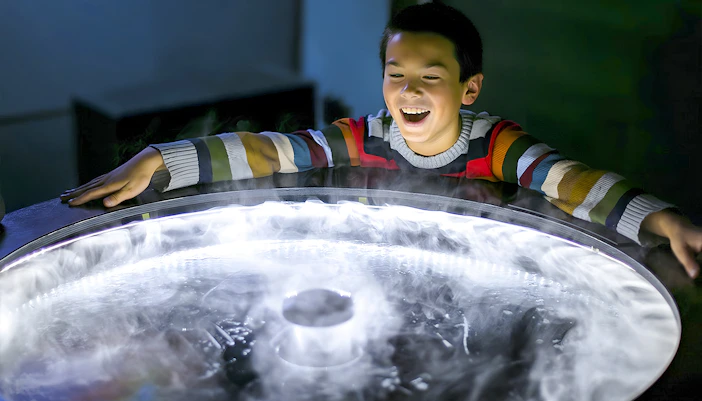
Worth knowing: It’s a smart contrast to SFMOMA if you want a second museum that feels hands-on, social, and much less gallery-like.
Also nearby
Distance: 800 m - 10-minute walk
Why people combine them: It’s a natural next stop if you want shopping, a meal, or a cable car ride after the museum without rearranging your whole day.
Museum of the African Diaspora
Distance: 300 m - 4-minute walk
Worth knowing: It’s smaller and easier to fit in than another major museum, so it works well if you still want culture after SFMOMA without committing to another half-day.
Eat, shop and stay near SFMOMA
- On-site: SFMOMA’s dining options are best used as a convenience break during a long visit rather than the main reason to eat here.
- The Grove Yerba Buena (5-minute walk, 690 Mission St): California café food at moderate prices, and a dependable pre-museum breakfast or coffee stop.
- Blue Bottle Coffee (8-minute walk, 66 Mint St): Coffee, pastries, and a quick grab-and-go option if you want to be at the museum right at opening.
- Tropisueño (9-minute walk, 75 Yerba Buena Ln): Mexican food and cocktails, and a better fit for a longer post-museum lunch than a fast snack.
- 💡 Pro tip: Eat before you enter if you want a focused 3-hour visit. Once you’re inside, the terrace and upper floors make it easier to keep going than to break for a full meal.
- SFMOMA Museum Store: The strongest place nearby for art books, exhibition catalogs, prints, and design-forward gifts, right on the ground level.
- Union Square: Best for broader retail and major brands if your museum stop is part of a shopping afternoon rather than a culture-only day.
Yes, if your priority is easy logistics and walkability. The blocks around SFMOMA make sense for a short San Francisco trip because you can reach the museum, Yerba Buena Gardens, Union Square, and transit without much effort. The trade-off is that the area feels more businesslike than neighborhood-driven once offices empty out.
- Price point: This area usually skews mid-range to expensive, especially on weekdays and convention dates.
- Best for: Short stays, first-time visitors, and anyone who wants to walk to the museum instead of treating it as a cross-city outing.
- Consider instead: Union Square works better if shopping and hotel choice matter more, while the Embarcadero suits longer stays if you want a more scenic base with easier waterfront time.
Frequently asked questions about visiting SFMOMA
Most visits take 3–4 hours if you want to see more than the highlights. You can do the biggest stops in about 2 hours, but the terrace, Living Wall, Fisher galleries, and family spaces are the parts people most often underestimate.
Yes, booking ahead is the safer choice for weekends, free-admission days, and special exhibitions. A weekday walk-up can still work, but pre-booking gives you a better entry time and avoids starting the visit at the ticket desk.
Arrive 10–15 minutes early. That gives you enough time for bag check, orientation, and getting upstairs quickly without turning a timed ticket into a rushed first half-hour.
Yes, but smaller is better. A compact day bag is easier to manage across seven floors, and checking bulkier items near the entrance makes the visit noticeably more comfortable.
Yes, in many areas, but flash should stay off. Public spaces, Sequence, the terrace, and the Living Wall are especially photo-friendly, while special exhibitions can apply tighter room-by-room rules.
Yes, but groups need more planning than solo visitors because the museum spreads people out vertically across multiple floors. It helps to agree on a route and a meeting point before you start rather than trying to regroup in the middle of the galleries.
Yes, it’s one of the easier major art museums to visit with children. Free admission for visitors under 18, interactive education spaces, and visually strong installations make it much more manageable than a label-heavy museum visit.
Yes, the museum is elevator-accessible and accommodates wheelchairs and strollers. SFMOMA also offers loaner wheelchairs, though a full seven-floor visit can still feel long, so it’s worth planning breaks.
Yes, both on-site and within a short walk. The museum’s dining spaces work well for a mid-visit break, while Yerba Buena and Union Square give you better variety if you want a full meal before or after.
Yes, visitors under 18 enter free. That makes SFMOMA especially good for families who want a flexible museum stop without paying adult-level admission for every child.
Weekday mornings right after opening are the best balance of lighter crowds and full access to the day’s galleries. First Thursdays are cheaper for Bay Area residents, but they’re usually worse if you want a quiet first visit.